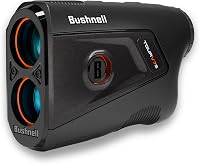
What Is a Golf Rangefinder and What Does It Do?
A golf rangefinder measures the distance from your position to a target, such as the flag, using a laser or GPS course data. It helps you choose a club with a clearer yardage reference.
On this page (8 sections)
- What is a golf rangefinder used for?
- How does a laser golf rangefinder work?
- How does a golf GPS device measure distance?
- What does slope-adjusted distance mean?
- What should you check before choosing one?
- Can you use a rangefinder in a golf tournament?
- How do you use a golf rangefinder during a round?
- Does a golf rangefinder make sense for you?
A golf rangefinder measures the distance from your position to a target, such as the flag, using a laser or GPS course data. It gives you a yardage reference to help choose a club and plan a shot.
Laser models measure a target you aim at. Golf GPS devices use course maps to show distances to mapped points, and some tools combine both approaches.
What is a golf rangefinder used for?
A golf rangefinder helps you estimate how far away a target is before a shot. That target might be the flag, a bunker edge, a tree, or another landmark you can see.
Knowing the distance can help you compare the shot with your usual club distances. It doesn't choose a club or account for every factor, such as wind, lie, or how firmly you strike the ball.
For a broader comparison of the main types, see laser, GPS, and hybrid golf range finders. If you're deciding whether to carry a device at all, our guide to a golf rangefinder or a yardage book covers the tradeoffs.
How does a laser golf rangefinder work?
A laser golf rangefinder sends a beam toward a target and measures the time it takes for the reflected light to return. The device uses that measurement to show the distance.
To measure the flag, hold the rangefinder steady, look through its viewfinder, and aim at the pin. Many golf models include a flag-lock or pin-lock mode to help separate the flag from objects behind it.
A laser can measure a target that isn't mapped in a GPS database, as long as you can see and aim at it. The reading can be harder to get when your hands move, the target is distant, or there are objects close to the line of sight.
What does pin lock do on a golf rangefinder?
Pin lock helps the device identify the flag when you aim toward it, rather than a background object. Some models confirm a locked target with a vibration or another signal.
This can be useful when a tree or other object sits behind the pin. Learn more about pin lock on a golf rangefinder and how the feature works.
How does a golf GPS device measure distance?
A golf GPS device uses your location and digital course information to show distances to mapped points. Depending on the device and course data, those points can include the front, center, and back of a green.
A GPS watch or handheld unit can be quick to check without aiming at a target. Its readings depend on the course map, so a feature that isn't mapped may not have its own distance.
For watches, speakers, and handheld units, browse our guides to golf GPS devices and handheld golf GPS units. A hybrid device may add laser measurements to course-distance information.
What does slope-adjusted distance mean?
Slope-adjusted distance accounts for the uphill or downhill angle between you and the target. A device with this feature may show both the measured distance and a calculated yardage that factors in elevation.
The adjusted number is a playing aid, not the straight-line distance alone. It may help you judge an uphill or downhill shot, but wind, turf, temperature, and your own shot still affect the result.
Slope features may be restricted during competition. The USGA's Rules of Handicapping and rules resources provide official rules information; check the rules for your event and device before play.
What should you check before choosing one?
Choose a golf rangefinder based on how you prefer to get yardage: aim at a target, check mapped course points, or use both. Then consider display clarity, ease of aiming, carrying method, and whether slope can be switched off.
A laser model can suit you if you want to measure specific targets. A GPS device may fit better if you want distances to mapped points without aiming each time.
The REDTIGER Slope Rangefinder has a flag-lock mode, slope switching, a magnetic mount, and USB-C charging.
The Callaway 300 Pro has an external slope switch and Pin Acquisition Technology that can confirm a locked distance with a short vibration.
The Acer Gadget includes slope on/off, flagpole locking with vibration, and USB-C charging.
For more detail on measurement limits, read how accurate golf rangefinders are. Accuracy claims don't remove the need to aim carefully and understand what target the device measured.
Can you use a rangefinder in a golf tournament?
Tournament rules determine whether a rangefinder is allowed and which features you may use. Some events allow distance-measuring devices but restrict features that gauge slope or provide other advice.
Check the event's local rules before you play. A slope switch alone doesn't confirm that a device is permitted for every competition; you need to use it in a way the rules allow.
See our guide to rangefinders in golf tournaments for more on the rules question.
How do you use a golf rangefinder during a round?
Use a rangefinder to get a yardage when you need a reference for a shot, then put it away so it doesn't slow play. For a laser, aim at the target and wait for a stable reading or target-lock signal.
For GPS, check the display for the mapped point you need. Make sure you understand whether you're viewing the front, center, or back of the green.
Practice using the device before relying on it during a round. A quick reading is useful only when you can identify the target and apply the number to your own shot.
Does a golf rangefinder make sense for you?
A golf rangefinder makes sense if you want a repeatable distance reference to targets or mapped points. Choose a laser if aiming at specific targets matters most, GPS if you prefer course distances at a glance, or a hybrid if you want both.
If you already get the yardages you need from course markers or a yardage book, you may not need another device. If you want a laser with target-lock features, compare the best golf rangefinders for everyday golfers.
Frequently asked questions
What does a golf rangefinder do?
A golf rangefinder measures distance from where you stand to a target, often the flag or a landmark. A laser model reads a chosen target, while a GPS device uses course data to show distances to mapped points.
The yardage can help you select a club and plan a shot.
Is a golf rangefinder the same as GPS?
No. A laser rangefinder measures the distance to a target you aim at, while a golf GPS device reports distances to mapped course points using location data.
A hybrid may combine both approaches.
Your choice depends on whether you want to aim at specific targets or see course distances at a glance.
What does slope mean on a golf rangefinder?
Slope is the uphill or downhill angle between you and a target. A rangefinder with slope can calculate an adjusted yardage that accounts for elevation, which can help with practice and casual play.
Tournament rules may restrict slope features, so check the event rules and use a device's legal mode when required.
Do beginners need a golf rangefinder?
A beginner may find a rangefinder useful for learning how far shots travel and choosing clubs with more confidence. It is optional, though: course markers, a yardage book, or a GPS device can also provide distance information.
Pick a method that is quick to use and fits your budget and playing habits.