Do I Need a Golf Rangefinder or Just a Yardage Book?
You need a golf rangefinder if you want a quick distance from your ball to a specific target; a yardage book may be enough if you prefer planning from course markers and notes. A GPS watch offers another hands-free option.
On this page (9 sections)
- Do I need a golf rangefinder for everyday rounds?
- What can a yardage book tell you that a rangefinder can't?
- When is a laser rangefinder useful?
- Is a GPS watch a good alternative to a yardage book?
- Which option should you choose for your game?
- Does a golf rangefinder improve your club choice?
- How accurate are laser and GPS yardages?
- How can you decide without buying a device?
- So, do you need a golf rangefinder?
You need a golf rangefinder if you want a quick distance from your ball to a specific target; a yardage book may be enough if you prefer planning from course markers and notes. A GPS watch offers another hands-free option.
The choice comes down to how you get yardages and what you want to measure. A laser reads a target you can see, a book gives you mapped distances to course features, and GPS displays distances based on your location.
Do I need a golf rangefinder for everyday rounds?
You don't need a golf rangefinder to play well or keep score. It can help if you often want the distance to a visible flag, layup point, or hazard from your current spot.
A yardage book is useful when you like to plan ahead and don't mind estimating your position relative to its markers. It can also show green shapes and course details that a single laser reading won't explain.
If you want a quick overview of the main device types, start with golf range finders explained. For a plain-language definition of the tool, see what a golf rangefinder does.
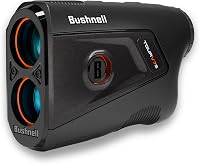
The Acer Gadget has slope on/off, flag locking with vibration, and a rechargeable USB-C battery. Those features may suit you if you want a laser device with target confirmation and don't want to manage a replaceable battery during a round.
What can a yardage book tell you that a rangefinder can't?
A yardage book can show mapped course details around a hole, while a rangefinder gives a distance to one target at a time. The book may help you plan around bends, hazards, and green shapes when those details are included.
A book does not automatically tell you the distance from your exact ball position. You need to find your location on the page and use the marked distances, which takes practice.
A laser also depends on your ability to see and aim at the target. It won't show the whole hole or tell you what club to hit.
When is a laser rangefinder useful?
A laser rangefinder is useful when you want a direct measurement to a visible target. You can aim at a flag or another object and use the reading as one part of your club decision.
Target-lock features may help confirm that you've aimed at the flag rather than something behind it. For more on that feature, read what pin lock does on a golf rangefinder.
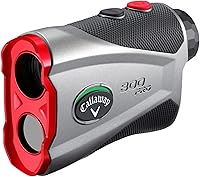
The Callaway 300 Pro also has an external slope switch, a cart magnet, and a molded carry case. It may suit you if you want a laser with pin confirmation and a way to turn slope off for tournament play where required.
A laser may be less convenient if you dislike aiming through an eyepiece, have trouble holding a device steady, or want hands-free yardages. Compare device types in our guide to golf rangefinders.
Is a GPS watch a good alternative to a yardage book?
A GPS watch is a good alternative if you want front, center, and back distances at a glance. It can save you from pulling out a book or aiming a laser for basic green yardages.
The TecTecTec ULT-G is a wrist-mounted GPS watch with front, center, and back distances, hazard distances, and more than 38,000 preloaded courses. It works during a round without requiring a phone, and it has no subscription fees.
GPS can be a better fit when you want a consistent view of the green and don't need a reading to every visible target. If a handheld screen suits you better, compare handheld golf GPS units.
Which option should you choose for your game?
Choose the tool that answers the yardage question you ask most often. A book supports advance planning, a laser measures to a visible point, and GPS gives mapped distances based on your location.
- Choose a yardage book if you like course notes and are comfortable estimating where you are on the map.
- Choose a laser if you often want the distance to a specific visible target.
- Choose a GPS watch if you want front, center, and back yardages without aiming.
- Keep using course markers if they give you enough information for your decisions.
You can also use more than one method. A book can help with overall hole strategy while GPS or a laser supplies a distance from your current position.
Does a golf rangefinder improve your club choice?
A rangefinder supplies a distance, but you still decide which club fits the shot. Wind, lie, elevation, hazards, and your own carry distances all affect that choice.
Slope compensation can provide an adjusted distance based on elevation, but tournament rules may restrict that feature. Read what the rules say about rangefinders in golf tournaments and check the event's local rules before play.
How accurate are laser and GPS yardages?
Accuracy depends on the device, course data, target, and conditions. A laser measures to the point it locks onto, while GPS relies on mapped course information and your location.
With a laser, be sure the target is the one you mean to measure. With GPS, confirm that your course is available and that its map information meets your needs.
For more detail, see how accurate golf rangefinders are.
How can you decide without buying a device?
Try the yardage method already available at your course before buying anything. Use marked distances and a scorecard or book for a few rounds, then notice whether you regularly want more precise yardages to targets.
If you borrow a rangefinder or GPS watch, pay attention to how quickly you can get a reading and whether you remember to use it. A device that stays in the bag won't help with your decisions.
So, do you need a golf rangefinder?
Pick a laser if you want distances to specific visible targets, a yardage book if you value course notes and planning, or GPS if you want mapped green distances at a glance. If course markers already give you enough information, you may not need another tool.
For a wrist-based option, compare golf rangefinder watches. For a handheld GPS choice, see the best handheld golf GPS units.
Frequently asked questions
Do beginner golfers need a rangefinder?
No. Beginners can learn with course markers, a yardage book, or a GPS device.
A rangefinder can help when you want the distance to a specific target, but it won't choose a club or account for every factor in your shot.
Start with the method you'll use consistently.
Is a yardage book more accurate than a rangefinder?
Neither is always more accurate. A laser can measure to a visible target from where you stand, while a yardage book relies on mapped distances and your position relative to course features.
GPS devices estimate distances from mapped course data.
Check how each tool handles your course.
Can I use a rangefinder in a golf tournament?
Tournament rules vary, so check the event's local rules before you play. Under the Rules of Golf, distance-measuring devices are generally allowed unless a committee adopts a local rule prohibiting them; slope and other features that measure conditions may be restricted.
Is a golf GPS watch easier than a rangefinder?
A GPS watch can be easier if you want front, center, and back distances without aiming at a target. A laser rangefinder can give a distance to a specific visible object.
The easier choice depends on whether you prefer glancing at your wrist or aiming and reading a laser.