Can PGA Golfers Use Rangefinders? What the Rules Say
PGA Tour golfers can use rangefinders in most events, under a local rule that permits distance-measuring devices. Slope and other features that help with play remain restricted, and event rules can differ.
On this page (8 sections)
- Can PGA golfers use rangefinders in tournaments?
- What do the rules allow a rangefinder to measure?
- Which rangefinder features can create a rules problem?
- Do amateur tournament rules differ from PGA Tour rules?
- What should you check before a competitive round?
- Can you use a rangefinder during a casual round?
- How can you choose a tournament-ready rangefinder?
- What is the rule for rangefinders in one sentence?
PGA Tour golfers can use rangefinders in most events, but permission to measure distance does not mean every feature is legal. The Rules of Golf restrict devices that gauge elevation changes or provide other help beyond distance information, and an event's local rules determine whether distance-measuring devices are allowed.
For casual rounds, a rangefinder can give you a distance to a target. In competition, the device and its settings have to fit the rules for that event.
Can PGA golfers use rangefinders in tournaments?
Yes, PGA Tour players can use rangefinders in most tournaments under a local rule permitting distance-measuring devices. The permission covers measuring distance, not using every function built into a device.
The Rules of Golf allow a committee to adopt a local rule permitting distance-measuring devices. Without that local rule, a player generally cannot use one during a round.
A tournament can also set conditions on permitted use.
The USGA and R&A rules distinguish measuring distance from getting help with other playing conditions. A device that measures elevation changes, recommends a club based on conditions, or suggests a line of play can cross that boundary.
For the specific wording, consult the current USGA Rules of Golf and the event's local rules. You can also read our guide to what a golf rangefinder is and what it does for a plain-language overview of the basic tool.
What do the rules allow a rangefinder to measure?
A permitted device can provide distance information, such as the distance from your position to the flag or another target. The committee's local rule and the device's features still matter.
A laser rangefinder sends a beam toward a target and reports a distance. Some models can also measure an incline or decline and calculate an adjusted yardage.
That second function gives information beyond distance and is generally not permitted during tournament play.
A GPS device may show distances to points on the course. If it also offers a prohibited feature, using the distance-only setting may not be enough unless the device meets the rules and the event permits it.
Check the device instructions and event guidance before relying on it.
Our guide to how accurate golf rangefinders are explains why target selection and the way you aim can affect a reading. Accuracy alone does not decide whether a device is permitted in competition.
Can a rangefinder with slope be legal if slope is switched off?
A model with a slope switch may be usable when the slope function is fully disabled and the event permits distance-measuring devices. The device must not provide or display prohibited information during play.
Some rangefinders have an external switch for turning slope on or off. That makes it easier to select a distance-only mode, but don't assume the switch alone settles the question for every tournament.
Check the committee's local rule and the device's manual.
The Callaway 300 Pro has an external slope switch and measures distance in yards or meters. Callaway says that its external switch is legal for tournament play when slope is off.
Check the switch position before your round, and don't use slope-adjusted numbers in competition. If you're unsure whether the device's display or other functions meet the event's requirements, ask the committee.
Which rangefinder features can create a rules problem?
Features that measure elevation changes or give advice beyond distance can make a rangefinder unsuitable for tournament use. Check the functions available on your model, not just the name on its case.
Slope compensation is a common example: it factors in incline or decline and provides an adjusted distance. Other features that recommend a club or help choose a line can also go beyond distance measurement.
Target-lock features are different from slope. They help identify the distance to a target, such as the flag, but you should still check the rules for your event and device.
Read our explanation of pin lock on a golf rangefinder to understand what that feature does.
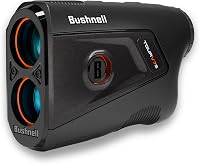
The Bushnell Tour V6 Shift includes slope compensation, a switch to turn slope mode on or off, and vibration with a visual signal when it locks onto the flag. Bushnell describes the switch as allowing tournament-legal play with slope off.
Treat the features separately: a flag-lock signal helps confirm a target, while slope compensation changes the distance information. Use only functions allowed by the tournament.
Do amateur tournament rules differ from PGA Tour rules?
They can differ because each event committee sets its own local rules. A PGA Tour event's policy doesn't automatically apply to a club event, charity tournament, or amateur championship.
Many competitions adopt a local rule allowing distance-measuring devices, but you should check rather than assume. The notice of competition, scorecard, starter, or committee can point you to the applicable rule.
Even when devices are allowed, the restrictions on extra information still matter. A device that calculates slope-adjusted distance or recommends a club may be prohibited regardless of whether you are a professional or amateur.
If you're playing in a club event, ask the committee before the first tee. A quick check can prevent confusion about whether your device is allowed or which settings you need to disable.
What should you check before a competitive round?
Confirm the event's local rule, set the device to an allowed mode, and keep prohibited features off. Do this before play so you don't have to troubleshoot settings during a hole.
Use this short checklist:
- Read the local rules or notice of competition for distance-measuring-device permission.
- Check your device manual for slope, elevation, club advice, and other extra functions.
- Turn off prohibited functions before play, if the event allows the device in a distance-only mode.
- Ask the committee if any rule or setting is unclear.
The Blue Tees Series 3 Max+ has a slope switch and a flag-lock vibration feature. Its product information describes slope mode as switchable, but the tournament's rule decides what settings are allowed.
Don't turn a prohibited feature back on during the round. If the device cannot be configured to meet the event's rules, leave it in your bag and use another permitted way to get yardage.
Can you use a rangefinder during a casual round?
Usually, yes, if the course or event has no rule against it. Casual play gives you more flexibility, but you may want to use distance-only mode to practice making your own club decisions.
Slope-adjusted yardage can be useful for practice because it accounts for elevation change. It can also make your practice routine different from competition, where that information may not be allowed.
Use settings that match your goal for the round.
If you want a broader comparison of device types, see laser, GPS, and hybrid golf rangefinders. A laser model gives a target distance, while GPS devices present course distances in a different format.
How can you choose a tournament-ready rangefinder?
Choose a rangefinder with clear distance-only settings, then confirm that its functions meet the event's local rule. A switch can make slope easier to disable, but it does not replace checking the rules.
If you want a laser with an external slope switch, compare the Callaway 300 Pro, Bushnell Tour V6 Shift, and Blue Tees Series 3 Max+. All three product descriptions identify a switch for disabling slope.
For more buying context, browse our golf rangefinder picks and compare the features that matter for your rounds. The golf GPS devices guide covers watch and handheld options if you'd rather check course distances on a screen.
What is the rule for rangefinders in one sentence?
PGA Tour players can use rangefinders in most events when the local rule permits them, but they must not use prohibited features such as slope-adjusted distances. For any competition, the committee's rules take priority over a device's marketing language or a general rule of thumb.
Choose a device with settings you can understand, check the event's instructions before play, and keep the device in an allowed mode. If you're still unsure, ask the committee before using it.
Frequently asked questions
Can PGA Tour players use rangefinders?
Yes, PGA Tour players can use rangefinders in most events under a local rule permitting distance-measuring devices. That permission does not allow every feature: devices must meet the Rules of Golf, and features that gauge elevation changes or suggest a line of play remain prohibited.
Check the event's local rules.
Is slope mode legal in a golf tournament?
Slope mode is generally not allowed during tournament play because it measures elevation changes and calculates a slope-adjusted distance. Some rangefinders have a switch that disables slope, but you must use the device in a permitted configuration and follow the event's local rules.
Can amateur golfers use rangefinders in tournaments?
Amateur golfers may use a distance-measuring device when the committee adopts a local rule allowing it. The device still cannot provide prohibited help, such as gauging elevation changes or recommending a line of play.
Check the tournament's notice or ask the committee before your round.
What should I check before using a rangefinder in competition?
Check the event's local rule and the device's settings before play. Confirm that any slope function is disabled if required, and avoid features that calculate elevation-adjusted yardage or recommend a club or line.
When the rules are unclear, ask the committee rather than assuming the device is allowed.