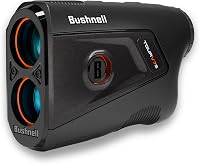
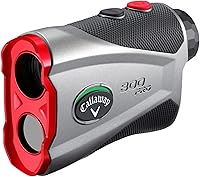
How to Use a Golf Laser Rangefinder
To use a golf laser rangefinder, hold the eyepiece to your eye, center the reticle on the flag, and press and hold the measure button until the yardage appears. Release, confirm the number, then pick your club from the reading.
On this page (11 sections)
- What do you need to know before you use a rangefinder?
- How do you aim a golf laser rangefinder at the flag?
- How do you press and read the yardage?
- What is pin lock and why does it help?
- What does slope mode change about the number?
- How do you use a rangefinder beyond the flag?
- How accurate are rangefinder readings in real play?
- How should you hold and carry a rangefinder on the course?
- How do you fix a rangefinder that won't lock on the flag?
- What mistakes should you avoid when using a rangefinder?
- How do you get faster at using a golf laser rangefinder?
To use a golf laser rangefinder, hold the eyepiece to your eye, center the reticle on the flag, and press and hold the measure button until a yardage appears. Read the number, release the button, and pick your club from that distance.
The rest of this guide covers steadying the aim, using pin lock, handling slope mode, and getting a reliable number when the pin is hard to see.
What do you need to know before you use a rangefinder?
Charge or load the battery first, then set your preferred mode before you reach the tee. A dead battery or the wrong slope setting wastes time on the first hole.
The Bushnell Tour V7 Shift takes a CR2 battery, and the Patriot Pack includes one. The Garmin Approach Z82 is rechargeable through its microUSB cable.
Decide whether you'll play with slope on or off. Slope gives a plays-like number that accounts for elevation, which helps in casual rounds.
Most competitions ban slope, so set the legal mode before you start. If you're unsure how the device fits the rules, our explainer on whether PGA golfers can use rangefinders walks through the tournament picture.
Finally, learn the button layout away from the course. A few minutes at the practice green makes the first real reading much quicker.
How do you aim a golf laser rangefinder at the flag?
Stand square to the target, hold the unit with both hands, and put the center circle on the flagstick. The laser fires where that reticle points, so a steady aim matters more than a fast press.
Brace your elbows against your ribcage to cut shake. Keep your head still and look through the eyepiece with your dominant eye.
A 6x magnification, like the Bushnell Tour V7 Shift offers, brings the flag close enough to see the pole clearly.
Aim at the base of the flag when the pin is far away or flutters in the wind. The cloth moves, but the pole stays put.
If trees or a bunker sit behind the green, shift a step so the flag shows against sky or short grass.
How do you press and read the yardage?
Press and hold the measure button until the display shows a distance, then release and read it. A quick tap often returns nothing, because the unit needs a moment to lock.
Many rangefinders confirm the lock with a vibration or a change on screen. The Garmin Approach Z82 gives vibrational feedback when it has locked in, and Bushnell's PinSeeker with Visual JOLT does the same job on the Tour V7 Shift.
When the number appears, note whether the unit shows raw distance, slope-adjusted distance, or both. The Tour V7 Shift uses a dual-color display: green for the plays-like yardage and red for the actual distance.
That split helps you compare the two at a glance.
If the number looks clearly wrong, such as a reading that matches the trees rather than the flag, take it again with a steadier hold.
What is pin lock and why does it help?
Pin lock is a targeting aid that helps the rangefinder pick the flagstick out of the background. It watches for the closest object in the line of sight and confirms when the pin is acquired.
Without it, a laser can catch a tree behind the green or a bunker lip in front of it. Pin lock narrows the reading to the flag so the number you get is the one to the hole.
Our guide to what pin lock on a golf rangefinder does explains the variations between brands.
The feature matters most on long approaches and on holes where the flag sits against trees or a crowd. It also speeds up play, since you spend less time re-aiming.
Pin lock isn't a guarantee. Very thin pins, heavy flag movement or poor light can still confuse it.
When that happens, aim at the base of the pole and hold the button longer.
What does slope mode change about the number?
Slope mode adjusts the raw yardage for the height change between you and the target, so an uphill shot reads longer and a downhill shot reads shorter. The adjusted figure is the plays-like distance.
The Tour V7 Shift puts its Slope First Technology reading front and center, so the compensated number is the first one you see. That suits players who want the club decision made quickly.
In competition, slope is usually off limits. Switch to a mode that shows only the straight-line distance before you tee off in a medal round.
Casual rounds and practice sessions are where slope earns its keep, especially on courses with big elevation changes.
Treat the adjusted number as a guide, not a command. Wind, lie and your own shot shape still affect club choice.
How do you use a rangefinder beyond the flag?
Range other targets, such as bunker lips, water edges and lay-up spots, to plan a safer route. The flag isn't the only number that matters on a hole you can't reach in two.
Aim at the front edge of a bunker to learn how much room you have before the sand. Range the far side of a pond to decide whether to lay up short or carry it.
On a par 5, range the corner of the dogleg to pick the club that leaves your favorite approach distance.
The Garmin Approach Z82 adds a full-color 2-D course map to the viewfinder, with Laser Range Arc drawing the ranged distance onto the map. That shows what sits in play at that number.
Its hazard view lets you scroll each hazard quickly.
The Tour V7 Shift has Yardage Range Recall, which brings back your last measured distance with one press. That's handy on the practice range or when you want to double-check a target.
How accurate are rangefinder readings in real play?
A quality laser rangefinder is accurate to about a yard in normal conditions, and some units are rated tighter. The Garmin Approach Z82 is rated within 10 inches of the flag at up to 450 yards.
The Bushnell Tour V7 Shift reaches 1300 yards.
Accuracy depends on the lock. A reading taken off the wrong target is wrong no matter how good the hardware is.
Rain, fog, low light and a fluttering flag all make the lock harder. A second press usually sorts it out.
For a fuller look at what affects the number, see our article on how accurate golf rangefinders are. If you're new to the device type, our primer on what a golf rangefinder is and what it does covers how laser units differ from GPS watches.
How should you hold and carry a rangefinder on the course?
Keep the unit in a case or on a strap so it stays dry and within reach. A rangefinder that bounces around in a cart or a pocket can fog up or lose its setting.
The Bushnell Patriot Pack includes a premium carry case, a microfiber cloth and a divot tool. The Garmin Approach Z82 ships with a carry case that has a carabiner clip for hanging on a bag.
A magnetic strap is another option for cart users. The Stripebird 2.0 Slim uses two neodymium magnets and a buckle-less band that wraps the device.
It fits Bushnell, Garmin and most other rangefinders.
Either way, wipe the lens after a wet round and store the unit out of direct sun.
How do you fix a rangefinder that won't lock on the flag?
Steady the unit, aim at the base of the pole and hold the button longer. Most failed locks come from movement or a busy background, not a broken device.
Move a step or two so the flag sits against sky or fairway. Clean the lens with a soft cloth, since smudges scatter the laser.
If the display stays blank, check the battery or charge level.
Try the pin lock mode if your unit has one. When the flag is thin or distant, a bright section of the pole works better than the cloth.
A dead battery is the most common cause of a blank screen.
What mistakes should you avoid when using a rangefinder?
The usual mistakes are rushing the press, aiming at the wrong target and leaving slope on in a competition. Each one costs you a number you can't trust.
Avoid pressing before the unit settles. Avoid aiming at the trees when the flag is in front of them.
Avoid trusting a reading taken in heavy rain without a second press.
Don't leave slope on for a medal round. And don't range the flag from a spot you won't actually play from, because the distance changes with your position.
Finally, keep the unit out of a hot car and away from water. The Bushnell Tour V7 Shift is rated waterproof, and the Garmin Approach Z82 carries an IPX7 rating.
A quick wipe and a dry case go a long way.
How do you get faster at using a golf laser rangefinder?
Practice the aim-and-hold sequence at the range until it feels routine. Speed comes from a steady hold and a clean lock, not from pressing harder.
Pick a flag at the range, range it, and check the number against the markers. Repeat until you can get a reading in a couple of seconds.
Then try it from an uneven lie, since balance changes the hold.
The players who look quick are the ones who set the mode before the round and keep the unit within reach. A steady hand and a second press when needed will do more for your pace than any feature.
The Bushnell Tour V7 Shift suits players who want the plays-like number first and the raw distance second. The Garmin Approach Z82 suits players who want course mapping alongside the laser.
The Stripebird strap is the pick if you want the unit on the cart within easy reach.
Frequently asked questions
How long do you hold the button on a laser rangefinder?
Hold the measure button for about one to two seconds until the display shows a distance or the unit vibrates. A quick tap often returns nothing, so press and hold through the lock confirmation, then release and read the number.
What does slope mode do on a rangefinder?
Slope mode adjusts the raw distance for the height change between you and the target, giving a plays-like number for uphill and downhill shots. Many units switch slope off with a button or a mode setting for competition rounds, so check the legal setting before you play.
How accurate is a golf laser rangefinder?
A quality laser rangefinder reads flags within about a yard in normal conditions, and some units are rated within 10 inches. Accuracy drops in rain, fog or heavy flag movement, so take a second reading when the first looks off.
Can you use a rangefinder in a tournament?
Many amateur events and casual rounds allow distance-measuring devices, but the committee's local rules decide, and slope mode is usually banned for competition. Check the notice board or ask the pro shop before you rely on one in a medal round.
How do you read a rangefinder when the flag is hard to lock?
Aim at the base of the flag or a bright section of the pole, steady your hands, and hold the button longer. If the unit still grabs a tree, move a step or two so the pin sits against sky or fairway rather than a busy background.