How Much Do Golf Rangefinders Cost?
Golf range finders usually cost 100 dollars to 400 dollars, and most golfers land in the 150 dollars to 300 dollars band. Below 100 dollars you get basic distance only, while above 300 dollars you pay for brand name, tighter tolerances or extras like a rechargeable battery.
On this page (9 sections)
- How much are golf range finders in each price tier?
- What does a budget golf rangefinder actually buy?
- What extra features push the price into the mid-range?
- What do you pay for above 300 dollars?
- Why do two rangefinders at the same price differ so much?
- Is a slope rangefinder worth the extra cost?
- How much should you budget for your first rangefinder?
- What should you do before you buy at any price?
- So how much are golf range finders, really?
Golf range finders usually cost 100 dollars to 400 dollars, and most golfers land in the 150 dollars to 300 dollars band. Below 100 dollars you get basic distance only, while above 300 dollars you pay for brand name, tighter tolerances or extras like a rechargeable battery.
Price matters more than the number on the tag, because the spread between cheap and premium models is wide. Knowing what each tier buys keeps you from overspending on features you'll never use.
If you're new to the device itself, our guide on what a golf rangefinder does covers the basics in plain terms. From there, the price question gets much easier to answer.
How much are golf range finders in each price tier?
Golf range finders break into three rough tiers: budget at about 100 dollars to 150 dollars, mid-range at 150 dollars to 300 dollars, and premium at 300 dollars and up. Each tier changes what you get, not just what you pay.
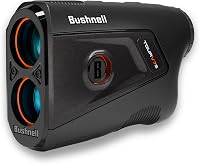
A budget model typically measures distance to the flag and offers a slope reading. The Bushnell A1-Slope sits in the compact end of the market and still packs a 6x magnification and a 5 to 1,300 yard range.
Mid-range units add better glass, more modes, and small conveniences like a magnetic mount. Premium models push brand name and tighter build quality, often with a longer warranty and a rechargeable battery.
The jump from budget to mid-range is the one most golfers notice. The jump from mid-range to premium is smaller in day-to-day use.
What does a budget golf rangefinder actually buy?
A budget golf rangefinder buys reliable flag distance and a slope reading, and that covers most rounds. You give up some polish, not the core job.
At this level, look for accuracy listed within a yard, a magnification of at least 6x, and a slope switch you can turn off for competition play. Those three features matter more than the brand.
The REDTIGER Slope Rangefinder shows what a lower-tier model can include: slope switching, a 1,200 yard maximum range, USB-C charging and a magnetic strip for your cart or bag.
What you'll notice on a budget unit is the glass and the finish, not the yardage. If you play a few times a month and want a simple number, this tier does the job.
What extra features push the price into the mid-range?
The mid-range price usually comes from slope plus a magnetic mount, a rechargeable battery or more measurement modes. Those are the features that separate a 150 dollars model from a 250 dollars one.
Slope correction is the big one. A rangefinder that adjusts for elevation gives you a "play as" distance, and a switch turns it off when slope isn't allowed.
Our explainer on how accurate golf rangefinders are covers why that number matters for club choice.
A magnetic cart mount is another small add-on that shows up in this tier. So is a rechargeable battery, which saves you from buying coin cells.
Neither changes the core reading, but both make the device easier to live with.
At this price you also start seeing pin-lock features. If you're not sure what that means, our guide to what pin lock does on a rangefinder explains the vibration cue in a few lines.
What do you pay for above 300 dollars?
Above 300 dollars you mostly pay for brand name, longer range and tighter quality control, not a different kind of reading. The distance number is often just as accurate on a cheaper model.
The Bushnell A1-Slope is the smallest laser rangefinder Bushnell has built, and it lists a 5 to 1,300 yard range with PinSeeker and JOLT vibration. Its slope mode can be toggled off for tournament-legal play.
What you get for the money is a known brand, a rechargeable battery rated for 50+ rounds, and a magnetic BITE skin for cart bars. Those are real conveniences, but they don't make the yardage more correct.
Skip this tier if you only need a number to the flag. Buy here when brand support, a rechargeable battery and a compact body matter to you.
Why do two rangefinders at the same price differ so much?
Two rangefinders at the same price differ because brand, magnification, glass and extras are priced separately from accuracy. A cheaper model can list the same 1-yard accuracy and still feel different in hand.
Check the magnification first. A 6x model like the A1-Slope and a 7x model like the REDTIGER both work, but the higher magnification makes a distant flag easier to pick out.
That's a viewing difference, not an accuracy difference.
Then check what's in the box. A rechargeable battery, a case, a magnetic mount and a lens cloth all add cost.
A model that ships with fewer extras can cost less without cutting the core feature.
Finally, check the slope switch. A rangefinder without one is cheaper, but it limits you in casual rounds where slope is allowed.
A switch gives you both modes.
Is a slope rangefinder worth the extra cost?
A slope rangefinder is worth the extra cost if you play courses with real elevation change and want a true plays-like distance. On flat courses, slope matters much less.
The Precision Pro NX10 Slope adds a twist: more than 20 interchangeable face and side plates snap on by hand. It locks the flag from up to 400 yards and gives a single number, with slope on or off by a switch.
The slope feature is the practical part. A switch lets you keep the device tournament legal when you need to.
The customization is a style choice, not a distance one.
Skip slope if you only play flat layouts and never need the adjusted number. Otherwise, the extra cost usually earns its place over a season.
How much should you budget for your first rangefinder?
For a first rangefinder, budget about 150 dollars to 250 dollars and put the money into slope, a clear view and a switch. That's the band where the useful features land without paying for brand extras.
Start with your typical round. If you play a hilly course and want the adjusted number, slope is worth it.
If you play flat layouts, a distance-only model saves money and does the job.
Then decide on the battery. A rechargeable unit like the A1-Slope means no coin cells to buy.
A standard battery model costs less up front and is easy to replace.
Finally, think about mounting. A magnetic cart mount is a small convenience that keeps the device within reach.
It's not a reason to spend more, but it's a nice extra at the mid-range price.
What should you do before you buy at any price?
Before you buy, decide whether you need slope and how you'll carry the device, then match the price tier to that answer. The number on the tag matters less than whether the features fit your rounds.
Read the magnification and the stated accuracy first. A 6x to 7x view with accuracy within a yard covers most golfers.
Anything beyond that is a preference, not a need.
Then check the slope switch and the battery type. Those two details decide how the device fits tournament play and your routine.
Our walkthrough on how to use a golf laser rangefinder shows how these settings work in practice.
Don't pay for a premium brand if a mid-range model has the same features. Do pay more when the brand support and the compact build matter to you.
So how much are golf range finders, really?
Golf range finders cost 100 dollars to 400 dollars, and the useful middle sits near 150 dollars to 300 dollars. Spend there first, and only move up when a named feature like a rechargeable battery or a longer range is worth it to you.
Choose the REDTIGER Slope Rangefinder for the lowest sensible spend on slope and charging. Choose the Precision Pro NX10 Slope if interchangeable looks and a 400 yard flag lock matter to you.
Choose the Bushnell A1-Slope if you want the smallest body, a known brand and a rechargeable battery rated for 50+ rounds. For most golfers, the A1-Slope is the pick when the budget allows it.
Once you've picked a tier, read what pin lock does on a rangefinder so you know what the vibration cue is telling you before your first round.
Frequently asked questions
How much are golf range finders on average?
Most golf range finders sell in the 100 dollars to 400 dollars range, and the typical shopper spends somewhere around 200 dollars. Basic distance-only units sit near the bottom of that band, and slope models with extra features sit in the middle to upper part.
Are cheap golf range finders accurate enough?
Yes, in most cases. A 100 dollars to 150 dollars model often lists accuracy within a yard, which is close enough for club selection.
The trade-off is usually build quality, glass clarity and fewer modes rather than distance accuracy.
Do slope rangefinders cost more than flat ones?
Usually yes. Slope adds a feature and a switch to turn it off for tournaments, so the same brand often charges more for the slope version.
The difference is often small, and a slope model with an on/off switch gives you both modes.
What makes a golf rangefinder cost more?
Brand, magnification, glass quality, slope and extra modes drive the price. A rechargeable battery or a magnetic cart mount also adds cost.
Beyond about 300 dollars you are mostly paying for brand name and tighter quality control rather than more useful features.
Is a more expensive golf rangefinder worth it?
Not always. If you only need flag distance and a slope reading, a mid-range model covers it.
Pay more only when you want a proven brand, a longer range, or extras like a rechargeable battery and a cart mount.