How Does a Golf Rangefinder Work?
A golf rangefinder fires a short, eye-safe laser pulse at the flag and times how long the reflection takes to return. It divides that time by the speed of light to get the yardage, then applies slope correction if that mode is on.
On this page (10 sections)
- How does a golf rangefinder measure distance?
- What happens after the laser hits the flag?
- What does slope mode do to the number?
- How do pin lock and jolt help you hit the flag?
- Why does the display show more than one number?
- How does magnification change what you see?
- Do you need a separate mount or case?
- Which rangefinder features matter most?
- How does a golf rangefinder turn light into a number?
- What should you check before trusting a reading?
A golf rangefinder works by sending a laser pulse at the flag and timing the reflection. The device converts that round-trip time into yardage, applies slope correction when that mode is on, and shows a number you can read in a second.
That short version covers the whole process. The rest of this guide explains each step in order, so you know what the number on the screen really means.
How does a golf rangefinder measure distance?
It measures distance with a laser and a very precise stopwatch. A tiny laser diode in the rangefinder fires a pulse of invisible, eye-safe light toward whatever the reticle is aimed at.
The pulse hits the flag, bounces back to a sensor in the device, and the processor records the time of flight. Because light travels at a known speed, the time it takes to go out and come back gives the one-way distance.
Most models do this several times per press and return the reading in well under a second. If you want the full picture of what these devices are and what they can do, our guide on what is a golf rangefinder walks through the basics.
What happens after the laser hits the flag?
The device filters the returning signal, picks the most likely target, and turns the timing into yards. Not every pulse comes back from the flag.
Light scatters off leaves, fences, carts and hills, so the processor checks the strength and timing of each return before it trusts it. That filtering is why a rangefinder can lock a thin flagstick at 200 yards but sometimes wobbles on a fence post at 40 yards.
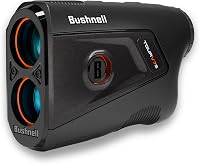
The quality of the laser, the sensor and the software all shape how steady that number feels. According to the manufacturer's specs, the Bushnell A1-Slope measures a flag from 1 to 350 yards, and its total range reaches 1,300 yards on larger targets.
What does slope mode do to the number?
Slope mode adds elevation change to the measured distance and shows a plays-like number. Say you're 150 yards from the flag, but the green sits 20 feet uphill.
The laser still measures 150 yards, because that's the real line to the flag. Slope mode then estimates the extra distance the uphill shot needs and shows a longer figure, often 155 to 160 yards on a climb like that.
On a downhill shot it works the other way and shortens the number. The result is the club and swing you'd actually use, not just the raw yardage.
Manufacturers build this in differently. The Bushnell A1-Slope uses patented slope technology to calculate uphill and downhill shots, and the Precision Pro NX10 Slope factors in elevation when slope is switched on.
Our article on how accurate are golf rangefinders covers how close those numbers get in practice.
How do pin lock and jolt help you hit the flag?
Pin lock is the feature that tells the device to hold onto the flag rather than whatever sits behind it. Trees, a clubhouse or a hill often stand behind the green, and a plain laser might grab those larger objects first.
Pin lock scans for the closest strong return and then confirms it with a signal you can feel. The Bushnell A1-Slope uses PinSeeker with JOLT, which gives a short vibration when the device has locked the flag.
Some models flash a target icon instead. For the full explanation of this feature and how each brand names it, see what is pin lock on a golf rangefinder.
How do you use a rangefinder correctly on the course?
Hold it steady, aim the reticle at the flag, and press the button once. Keep your hands and arms still until the number stops changing.
Stand clear of the cart and other players so a shoulder or a club doesn't block the beam. If the reading jumps around, steady your grip and try again.
Our step-by-step walkthrough on how to use a golf laser rangefinder covers stance, aiming and reading the display in more detail. A rangefinder measures what you point it at, so good aim matters as much as a good device.
Why does the display show more than one number?
Many rangefinders show a straight-line distance and a plays-like distance at the same time. The straight-line figure is the raw laser measurement, flag to device.
The plays-like figure is that distance after slope correction. On flat ground the two match.
On a slope they split, and the gap grows with the steepness. A slope toggle turns the second figure on or off.
The Bushnell A1-Slope lets you switch slope mode with the mode button for tournament-legal play, and the Precision Pro NX10 Slope flips between slope on and off with a single switch. When you're playing a round where distance devices are allowed but slope isn't, leave slope off and read the raw number.
In practice rounds, the plays-like figure helps you choose the right club for an uphill or downhill approach.
How does magnification change what you see?
Magnification makes the flag bigger and easier to aim at, but it doesn't change how the laser works. Most golf models use 6x magnification, which turns a flagstick at 200 yards into a clear, steady target in the viewfinder.
Higher magnification narrows the field of view and makes your hands' shake more visible, so 6x is a practical middle ground. The Bushnell A1-Slope and the Precision Pro NX10 Slope both offer 6x magnification.
The real difference in daily use comes from lens quality and display contrast. A sharp, bright viewfinder helps you find the flag in low sun, and a clear display lets you read the number without squinting.
Magnification is the part of how a golf rangefinder works that decides how easy the device feels to aim.
Do you need a separate mount or case?
No, but a mount or case keeps the device close and protected between shots. A rangefinder works the same whether it sits in a cart cup holder, in your pocket or on a cart bar.
A magnetic mount simply saves you digging for it on every approach. The Stripebird 2.0 Slim Golf Rangefinder Magnetic Strap is a buckle-less strap that wraps around the device and holds it with two neodymium magnets.
It fits models from Bushnell, Precision Pro and other major brands. The strap attaches to a cart bar or, when you walk, to a push cart mount sold separately.
Its slim design leaves the buttons exposed so you can grab a reading without taking it off. A strap or case is a convenience, not a requirement.
Which rangefinder features matter most?
The core is the laser and the processor, so start there. A steady, accurate reading matters more than a long feature list.
Look for a model with a slope toggle if you play competitions, because a slope-only device can't be used when the local rule bans it. Pin lock or jolt vibration helps on courses with busy backgrounds.
A clear 6x viewfinder and a bright display decide how easy the device is to use in low light. Battery type matters too: the Bushnell A1-Slope uses a rechargeable lithium-ion battery rated for 50+ rounds, while the Precision Pro NX10 Slope runs on a CR2 3V battery.
A magnetic mount is a nice extra, but it's easy to add later. The best choice is the one whose core measurement you trust round after round.
How does a golf rangefinder turn light into a number?
The whole answer to how does a golf rangefinder work comes down to three steps. A laser pulse leaves the device, hits the target and returns.
The processor times the round trip and converts it into yards. Slope correction adjusts that figure when you want a plays-like distance.
Everything else, from magnification to pin lock to mounts, supports those three steps. Pick a model with a slope toggle for competition rounds, and a steady viewfinder you can read in bright sun.
Practice on the range with known targets until you trust the number, and you'll spend less time guessing and more time swinging the right club.
What should you check before trusting a reading?
Check that the device locked the flag, not the trees behind it. A pin lock signal or a steady, unchanging number is your confirmation.
Point at a bunker lip or a cart path now and then to see how the device handles flat targets. After a few rounds, you'll know how your model behaves and when to press the button twice.
The better you understand how a golf rangefinder works, the less the number feels like a mystery.
Frequently asked questions
Do golf rangefinders work in the rain?
Light rain barely affects the laser, but a wet lens or fogged viewfinder can make the flag harder to lock. Waterproof and water-resistant models handle the weather better, so dry the lens before each reading.
Can a rangefinder measure a shot to a bunker instead of the flag?
Yes. Point the reticle at any solid target and press the button.
Sand, trees and steep banks scatter the beam more than a flat flag, so you'll get a reading but with less certainty.
Why does my rangefinder show a different number each press?
The laser can catch different objects on each press, like the flagstick, the trees behind it or a cart in front. Pin lock or jolt features help confirm you're on the flag, and a steady hold reduces the spread.
Do rangefinders work in cart-path-only rounds or for practice?
Yes. Most models run on a rechargeable battery or a coin cell and need no network connection.
A round on the range with a known target is the easiest way to see how yours behaves.
Is a rangefinder legal in competition?
Many tournament rules allow distance-measuring devices when a local rule permits them. Slope, or plays-like, mode must be switched off in competition, so a model with a slope toggle keeps you covered.