9 Best Golf Rangefinders for Seniors (November 2026)
The best golf rangefinders for older golfers include the REVASRI Range Finder for Golf for most seniors, the Bushnell Tour V6 Shift for the clearest flag lock, and the Callaway 300 Pro for an easy cart magnet.
On this page (9 sections)
- The best golf rangefinders for seniors, ranked
- How these rangefinders compare side by side
- How we compared these golf rangefinders
- What should a senior look for first in a golf rangefinder?
- Is a slope switch worth it for older golfers?
- Laser or talking GPS: which suits an older golfer better?
- Which rangefinders are easiest to read in bright sun?
- Which rangefinder is lightest to carry for 18 holes?
- Which golf rangefinder for seniors is the right buy?
The best golf rangefinder for seniors is the REVASRI Range Finder for Golf, because a clear coated lens, one-button measuring and a slope-off mode cover most rounds without fuss. Step up to the Bushnell Tour V6 Shift if you want the strongest flag confirmation, or pick the GolfBuddy Voice 2S+ if you would rather hear the distance than look through a scope.
A rangefinder helps when the number is easy to see and easy to get. For an older golfer, the display, the button layout and the weight in your hand matter more than an extra hundred yards of reach.
If you are still deciding whether you need one at all, our guide on what is a golf rangefinder explains the basics. The wider golf rangefinder roundup covers options for every player, and our what is a good rangefinder for golf checklist covers the features that matter most.
Our score weighs specs, features and how well each model fits what you are shopping for.
Our picks at a glance
-
1
-
2

-
3

The best golf rangefinders for seniors, ranked
The REVASRI takes the top spot for most older golfers, and every other pick here wins on one specific need: a brighter readout, a longer range or a voice that does the reading for you. Work down the list by the job you want solved.
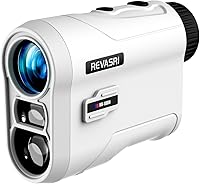
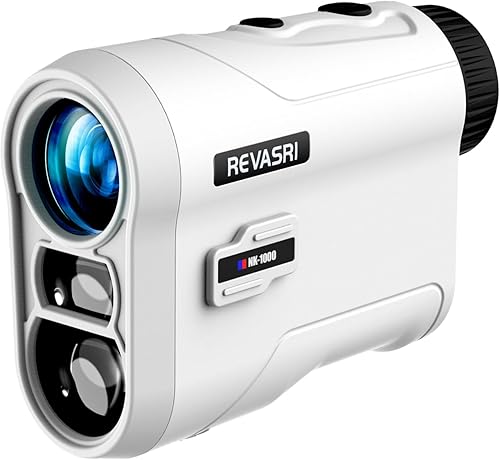
REVASRI Range Finder for Golf: Best for most seniors
- 1000-yard range
- ±1 yard accuracy
- 0.5-second measurement
- Slope switch and pin lock vibration
- 4.3 oz
A light, simple laser with one-button measuring, a slope switch for tournament rounds and a clear multilayer lens.
Pros
- Light at 4.3 oz
- Slope-off mode for tournaments
- USB-C rechargeable
- Full multilayer coated lens
Cons
- 6.5x magnification is lower than the 7x picks here
- No magnetic mount
REVASRI suits the golfer who wants one button and a clear number. The fully multilayer coated lens boosts light through the scope and cuts glare, so the readout holds up on a bright fairway.
It measures in 0.5 seconds to ±1 yard, and its 1,000-yard range covers every shot you will take. In slope-on mode you see the angle, the sight-line distance and the adjusted distance together.
Flip slope off and only the straight-line number stays on screen, which is the mode for tournament play. The external angle switch sits on the outside of the body, so you can set it before the first tee without digging through menus.
At 4.3 oz and 3.8 x 2.6 x 1.3 inches it slips into a pocket or bag without weighing you down. USB-C charging means no coin battery to swap, and a low battery indicator warns you before the round runs dry.
The one trade-off is reach: 6.5x magnification and 1,000 yards are less than the 7x and 1,200-yard picks further down, and there is no magnet to park it on the cart.
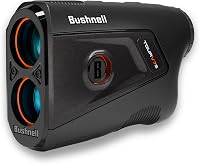
Bushnell Tour V6 Shift: Best for the clearest flag lock
- 1300-yard range
- 6x magnification
- Visual Jolt and Pinseeker
- External slope switch
- BITE magnetic mount
- IPX6
A premium laser with a red visual ring and vibration when it locks the flag, plus a magnet for the cart frame.
Pros
- Visual ring plus vibration on lock
- Longest range here at 1,300 yards
- Magnetic cart mount
- IPX6 water rating
Cons
- Ties for heaviest pick here at 16 oz
- Highest price tier in this group
Bushnell is the premium choice, and its flag lock is the easiest to confirm here. A red visual ring flashes and the body vibrates when it locks the pin, so you get a light cue as well as a feel cue.
For anyone who cannot feel a faint pulse through a glove, the flashing ring is the backup signal.
The 1,300-yard range and 6x optics reach the longest targets in this group. An external slope switch keeps the unit tournament legal, and the BITE magnet sticks it to the cart frame for one-handed grabs between shots.
The IPX6 rating is the highest water protection here, which matters on damp mornings. The Patriot Pack adds a case, a veteran coin, a cloth and a CR2 battery.
Two real costs come with it: 16 oz ties for the heaviest body on this list, and it sits in the highest price tier. If neither bothers you, this is the most confidence-inspiring lock of the group.
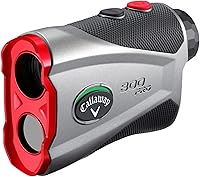
Callaway 300 Pro: Best for an easy cart magnet
- 5-1000 yard range
- ±1 yard accuracy
- 6x magnification
- Pin Acquisition Technology
- External slope switch
- Magnahold cart mount
A well-known brand laser with a strong built-in magnet and a pulse that confirms the pin lock.
Pros
- Strong integrated cart magnet
- Slope switch is tournament legal
- 8 oz body
- Hard carry case included
Cons
- IPX4 water rating
- Pin lock works to about 300 yards
Callaway suits the golfer who wants the scope to stay on the cart. The Magnahold magnet is strong and integrated, so the unit grabs the cart frame and comes free with one hand.
That saves bending and reaching every few holes, which adds up over 18.
Pin Acquisition Technology locks the flag to about 300 yards, and a short vibrating pulse confirms it. The 6x magnification and 1,000-yard range with ±1 yard accuracy cover normal approach shots.
The external slope switch makes it legal for competition rounds.
At 8 oz it sits in the middle of the group for weight. Its IPX4 rating handles light damp but is below the Bushnell's IPX6.
The premium molded hard case with a carabiner and an elastic quick-close band keeps it protected in the bag.
Choose it if the magnet is the feature you will use most. Skip it if you often play in steady rain or need to lock a flag from beyond 300 yards.
Blue Tees Series 3 Max+: Best for bright sunlight

- 1000-yard range
- 6x magnification
- Auto-Ambient display
- Flag lock vibration
- Magnetic strip
- USB-C charging
Its display switches text color to fit the light, which helps in glare and shade.
Pros
- Display adjusts to lighting
- Slope switch
- Built-in magnet
- Rechargeable over USB-C
Cons
- 16 oz
- Water resistant rather than fully waterproof
Blue Tees solves a specific senior problem: reading the display when the sun is behind you or the shade is deep. Its Auto-Ambient screen switches text between red and black to match the light, so the number stays legible as conditions change through the round.
The 6x magnification and 1,000-yard range with ±1 yard accuracy are standard for this group. Flag lock vibrates to confirm the target, and the adaptive slope switch turns compensation on or off.
A built-in magnetic strip holds it to the cart.
It recharges over USB-C and comes with a case, a cloth and a lanyard. The trade-offs are weight and water protection: 16 oz in the hand, and an IPX4 rating that is water resistant rather than fully sealed.
Its 2-year warranty is also longer than several picks here.
Pick it if glare is your main complaint. Look elsewhere if you want the lightest body or the best rain protection.
MOESAPU Golf Range Finder with Slope: Best for long battery life
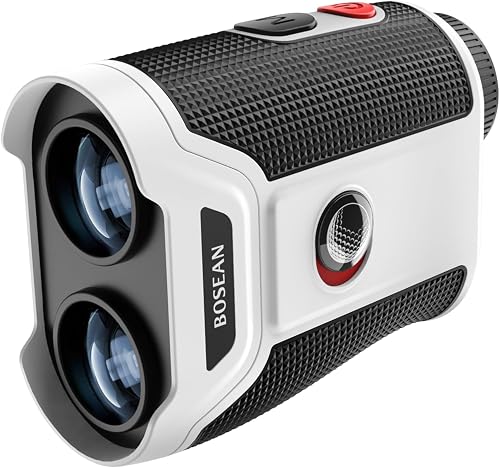
- 5-1200 yard range
- ±1 yard accuracy
- 7x magnification
- Transflective LCD
- Pin lock vibration
- USB-C, 15,000 measurements
A rechargeable laser with a bright transflective screen and a long run time between charges.
Pros
- 7x magnification
- 15,000 measurements per charge
- Built-in magnet
- IP54 dust and splash rating
Cons
- 6.4 oz is heavier than the REVASRI
- IP54 is not a full waterproof rating
MOESAPU suits the golfer who plays several rounds a week and does not want to think about charging. The maker rates the USB-C battery at 15,000 measurements per charge, with an indicator so you know where you stand.
Its 7x magnification and 5 to 1,200-yard range with ±1 yard accuracy put it near the top of this group for reach. The transflective LCD stays readable in sun or shade.
Pin lock vibrates in 0.5 seconds and the slope switch flips compensation on or off. Continuous scan mode lets you sweep across several targets instead of pressing the button once per object.
Built-in magnets attach it to a cart or a metal club. At 6.4 oz and 4.11 x 1.7 x 3.1 inches it is still pocketable.
The IP54 rating handles dust and splashes but is not a full waterproof seal.
It is the pick for long battery life and a bright screen. It gives up a little to the REVASRI on weight and to the Bushnell on water protection.
REDTIGER Slope Rangefinder: Best for simple pin locking

- 5-1200 yard range
- 0.5-yard accuracy
- 7x magnification
- Six measurement modes
- Magnetic strip and belt clip
- USB-C charging
A six-mode laser with a transflective screen and two ways to attach it to a cart or bag.
Pros
- Six measurement modes
- 7x magnification
- Magnetic strip plus belt clip
- Two-year warranty
Cons
- 6.4 oz
- Six modes take practice to cycle through
REDTIGER gives you more modes than most golfers will use. Six settings cover slope compensation, flag locking, horizontal and height ranging, speed and continuous scan, switched with brief button presses.
The 7x magnification and transflective LCD keep the reading clear, and the 5 to 1,200-yard range with 0.5-yard accuracy is among the tightest here. A magnetic strip holds it to a cart or club, and a magnetic belt clip lets you carry it on your bag.
It recharges over USB-C and REDTIGER backs it with a two-year warranty. At 6.4 oz it matches the MOESAPU for weight.
Its IP54 water resistance is fine for morning dew, not for a downpour. The kit also includes a hand rope and a mountaineering buckle for carrying it on the bag.
Pick it if you like having extra modes for practice and range sessions. A golfer who wants one button and nothing else will find the mode cycling more than they need.
Acer Gadget: Best for steady hands

- 800-yard range
- ±0.5-yard accuracy
- 6x magnification
- Anti-shake technology
- Flag lock vibration
- USB-C charging
An anti-shake laser with a bright LCD and a short 800-yard range.
Pros
- Anti-shake technology
- 0.5-yard accuracy
- Flag lock vibration
- Rechargeable over USB-C
Cons
- 800-yard range is shortest here
- 11.2 oz
- No slope switch named in its features
Acer's Gadget model targets the unsteady hand. Anti-shake technology steadies the view, so the flag stays framed while you press the button.
Its 6x magnification and 800-yard range with ±0.5-yard accuracy keep readings quick. Flag lock vibrates to confirm the pin, and the bright LCD is easy to read in normal light.
It recharges over USB-C. Six modes cover slope compensation, vertical and horizontal distance, angle, speed and scanning, so it is more than a golf tool.
The limits are clear. 800 yards is the shortest range in this roundup, and 11.2 oz makes it one of the heavier bodies.
Its listed features do not name a dedicated slope switch, though slope compensation is one of its six modes.
Choose it if shaky hands are the reason you have avoided a rangefinder. Skip it if you want slope-adjusted distances or a light carry.
Acer Pro: Best for big text in low light

- 5-1200 yard range
- ±0.5-yard accuracy
- 7x magnification
- Anti-shake technology
- Six modes
- Magnetic stripe
- USB-C, 20,000 measurements
A transflective LCD laser with 7x clarity, anti-shake and a slope switch for tournament rounds.
Pros
- Transflective LCD
- 7x magnification with anti-shake
- Slope switch for legal play
- Magnetic cart mount
Cons
- Six modes take practice
- Weight figure in its specs is unusually low
Acer's Pro model pairs a transflective LCD with 7x magnification and anti-shake, so the screen stays bright and the view stays steady. That combination is the strongest argument for it here.
It measures 5 to 1,200 yards to ±0.5 yard and offers six modes, switched with the M button. Holding that button for two seconds flips between meters and yards.
An external slope switch turns compensation off for tournament play while pin lock and vibration stay active. A magnetic stripe holds it to the cart, and USB-C charging is rated for 20,000 measurements from a 750mAh battery.
The spec sheet lists its weight as 1.85 oz, which reads unusually low for a body this size, so weigh that figure against the others here. Six modes also take practice to learn.
It is a good fit if you want a bright screen and steady view at a mid-range price. The REVASRI is simpler to run.
GolfBuddy Voice 2S+: Best for golfers who prefer voice

- Talking GPS
- Clip-on hat mount
- Front, center and back distances
- 18 hours of battery
- 40,000 preloaded courses
A voice GPS that reads distances aloud and clips to a hat, so you never raise a scope to your eye.
Pros
- Spoken distances
- Clips to a hat or belt
- 18 hours of battery
- 40,000 courses preloaded
Cons
- No laser distance to the pin
- IPX3 water rating
- Needs a charge after about three rounds
GolfBuddy is the odd one out because it is a talking GPS, not a laser. It clips to your hat or belt and speaks the distance to the front, center and back of the green at the press of a button.
That removes the need to raise a scope to your eye and find a flag, which is the step some older golfers find hardest. It shows the same distances on a 1-inch LCD and lets you set the audio volume from 0 to 5.
It comes preloaded with 40,000 courses. The screen also shows the green's shape and your angle of approach, with hole and par number where available.
Battery life runs about 18 hours in golf mode, or roughly three rounds. It measures shot distance and finds the course and hole automatically.
Hazard and bunker positions are marked with left and right distances, and a reverse mode lets belt wearers read the screen while it hangs.
The trade-offs are real: it gives green distances, not a laser number to the pin, and its IPX3 rating is the lowest here. Pick it if voice guidance matters more than pin accuracy.
How these rangefinders compare side by side
The table lines up range, magnification and water rating so you can see where each model sits before reading the full write-ups. Higher numbers are not automatically better; they matter only against how you play.
| Product | Best for | Range | Magnification | Weight | Our score |
|---|---|---|---|---|---|
| REVASRI Range Finder for Golf | most seniors | 5-1000 yards | 6.5x | 4.3 oz | 9.3 |
| Bushnell Tour V6 Shift | the clearest flag lock | 5-1,300 yards | 6x | 9.0 | |
| Callaway 300 Pro | an easy cart magnet | 5-1000 yards | 6x | 8 oz | 8.5 |
| Blue Tees Series 3 Max+ | bright sunlight | 1000 yards | 6x | 8.4 | |
| MOESAPU Golf Range Finder with Slope | long battery life | 1200 yards | 7x | 6.4 oz | 8.3 |
| REDTIGER Slope Rangefinder | simple pin locking | 5-1200 yards | 7x | 6.4 oz | 8.1 |
| Acer Gadget | steady hands | 800 yards | 6x | 11.2 oz | 7.9 |
| Acer Pro | big text in low light | 5-1200 yards | 7x | 1.85 oz | 7.7 |
| GolfBuddy Voice 2S+ | golfers who prefer voice | GPS, not laser | 1.1 oz | 7.6 |
How we compared these golf rangefinders
We ranked these by what makes a rangefinder easy for an older golfer to live with, not by raw reach alone. Display clarity, button count and weight carried the most weight in the scores.
We checked the specs each brand publishes: measuring range, magnification, accuracy, slope switching, flag lock feedback, water rating and charging type. We also weighed whether the unit has a magnet for the cart, since fewer bends and reaches help on the course.
A long range number earned points only when the optics and display could support it. A 1,200-yard unit with a dim screen scored below a 1,000-yard unit with a clear one.
The same logic applied to accuracy claims: a ±0.5-yard figure counts for more when the screen shows it cleanly.
Finally, we looked at the tournament question. A slope switch that turns off compensation cleanly is worth more to a regular competitor than an extra mode they will never use.
A long warranty or a spare battery in the box broke ties between units that otherwise matched.
What should a senior look for first in a golf rangefinder?
Start with the display and the controls. A bright screen and one-button measuring decide whether you enjoy using the unit, long before range or magnification comes into it.
Look for a transflective or auto-adjusting display if you play in strong sun. The Blue Tees Series 3 Max+ and the Acer Pro both use screens built to stay readable in glare.
The MOESAPU and REDTIGER also list transflective LCDs.
Check the weight in your hand. The REVASRI at 4.3 oz and the GolfBuddy Voice 2S+ at 1.1 oz are the lightest here, while several 16 oz models will feel heavier over 18 holes.
Is a big display or a long range more useful?
A big, bright display wins for most older golfers. A 1,000-yard range already covers the longest shot you will take, so extra reach rarely changes a club choice.
Do I need anti-shake?
Anti-shake helps if your hands are unsteady when you hold a scope to one eye. The Acer Gadget and Acer Pro both include it.
If your hands are steady, skip it and put the money toward a clearer screen.
Should the buttons be simple or full of modes?
Fewer buttons suit most older golfers. The REVASRI runs on one button to measure and one to change units.
Six-mode units like the REDTIGER and Acer Pro need you to learn a cycling sequence before you can reach the setting you want mid-round.
Is a slope switch worth it for older golfers?
Yes, if you play in competitions. A slope switch lets the same unit give adjusted distances in casual rounds and straight-line distances in tournament play.
The REVASRI, Bushnell Tour V6 Shift, Callaway 300 Pro, Blue Tees Series 3 Max+, MOESAPU and Acer Pro all offer a slope on/off control. In slope-off mode the angle value drops off screen and only the line-of-sight distance shows.
Pin lock and vibration keep working in that mode on the units that name both.
Our golf rangefinder with slope roundup goes deeper on how compensation works and when it helps.
What does slope compensation actually do?
It measures the angle of the ground and converts your sight-line distance into the distance a ball would play on flat ground. That helps on uphill and downhill approaches where the raw number misleads.
On a flat hole the adjusted number and the straight-line number come out close together.
Can I leave slope on all the time?
Only in casual rounds. Most tournament rules forbid slope-adjusted readings during play, so flip the switch off before your first tee shot.
Laser or talking GPS: which suits an older golfer better?
A talking GPS suits golfers who find it hard to hold a scope steady or see through a small eyepiece. A laser suits golfers who want the exact pin number and play competitively.
The GolfBuddy Voice 2S+ is the voice option here. It speaks front, center and back distances and clips to a hat, so there is no aiming at all.
Its limit is precision: you get green distances, not a laser reading to the flag.
A laser like the REVASRI gives you the pin number to within a yard. The cost is the aiming step, which needs a steady hand and one clear eye.
Who should pick the talking GPS?
Pick it if bending and squinting through a scope is the part you dread. It is also handy for a golfer who walks and wants hands-free info.
Because it clips to a hat and speaks, there is no need to stop, aim and read before every shot.
Who should pick a laser?
Pick a laser if you play in leagues or tournaments and need the exact pin distance. The REVASRI covers that at the lowest weight in this group.
A laser also gives you a number for any target, such as a bunker lip or a tree at the corner, not just the green.
Which rangefinders are easiest to read in bright sun?
The Blue Tees Series 3 Max+ and the Acer Pro are the easiest to read in strong light. Both use screens that adapt to the light rather than washing out.
The Blue Tees Auto-Ambient display switches text between red and black to contrast the conditions. The Acer Pro uses a transflective LCD that stays visible in sun or shade.
The MOESAPU and REDTIGER also use transflective screens.
A fully multilayer coated lens helps too, because it boosts light through the scope and cuts reflection. The REVASRI lists that coating and a clear view as part of its build.
Coating and screen type together decide whether a number reads cleanly on a glaring afternoon.
Does magnification change readability?
Higher magnification can make the flag look bigger, but it also magnifies any shake. A 6x to 7x scope with a bright screen reads better for most older golfers than a higher power with a dim display.
What about glare from the sun behind me?
A coated lens and an auto-adjusting screen handle glare better than a plain LCD. If glare is your main complaint, start with the Blue Tees Series 3 Max+.
Which rangefinder is lightest to carry for 18 holes?
The GolfBuddy Voice 2S+ is lightest at 1.1 oz because it is a small GPS, not a laser. Among the lasers, the REVASRI is lightest at 4.3 oz.
Weight matters most if you carry your bag or walk the course. A 16 oz laser like the Bushnell Tour V6 Shift or Blue Tees Series 3 Max+ adds noticeable weight to a pocket over a full round.
The MOESAPU and REDTIGER sit in the middle at 6.4 oz.
Does a heavier body steady the aim?
A heavier unit can feel steadier in the hand, which is why some golfers prefer the 16 oz models. The Acer Gadget and Acer Pro add anti-shake instead, at 11.2 oz and a very light listed figure.
Should I use a cart magnet instead of carrying it?
If you ride a cart, a magnet saves you from holding the unit between shots. The Bushnell, Callaway, Blue Tees, MOESAPU, REDTIGER and Acer Pro all include a magnetic mount.
The Callaway Magnahold and Bushnell BITE are the strongest of the group, and both free a hand for the next club.
Which golf rangefinder for seniors is the right buy?
For most older golfers, the REVASRI Range Finder for Golf is the best golf rangefinder for seniors, because it stays light at 4.3 oz and keeps measuring to one button. It gives you slope on for practice and slope off for tournaments.
Pick the Bushnell Tour V6 Shift when flag lock confidence and rain protection matter most. Take the Callaway 300 Pro if you want a strong cart magnet and a well-known name.
The Blue Tees Series 3 Max+ is the pick for glare, and the MOESAPU covers long battery life with a 7x view.
If aiming through a scope is the part you want to skip, choose the GolfBuddy Voice 2S+ and let it read the green to you. Whichever you choose, flip the slope switch off before a competition round and keep a spare charge for a long day.
For the full field beyond this group, see our golf rangefinder roundup and the what is a golf rangefinder explainer.
Our top 3 picks at a glance
-
1
-
2
-
3
Frequently asked questions
Can seniors use a slope rangefinder in a tournament?
Yes, as long as you switch slope off before play. The REVASRI, Bushnell Tour V6 Shift and Callaway 300 Pro all have an external slope switch, and in slope-off mode they show straight-line distance only.
How much magnification do I need to read a flag?
6x to 7x is the normal range in this group, and it is enough to frame a flag from typical approach distances. Higher magnification can steady the view less in an unsteady hand, so look for anti-shake if that is your concern.
Do these rangefinders work in rain?
Check the water rating rather than assuming. The Bushnell Tour V6 Shift is rated IPX6 and the REVASRI, MOESAPU and Acer Pro are IP54, while several picks here are IPX4 or IPX3 and suit light damp only.
How long does a rangefinder battery last?
Most picks here recharge over USB-C, and the makers' figures include 15,000 measurements for the MOESAPU, 20,000 for the Acer Pro and 30,000 for the REDTIGER. The GolfBuddy Voice 2S+ is a GPS and runs about 18 hours in golf mode, or roughly three rounds.
What should I look for first in a senior-friendly rangefinder?
Start with the display and the controls. A bright transflective screen, a slope switch and one-button measuring matter more than an extra 100 yards of range you will rarely use.