Golf Rangefinder vs GPS: Which Should You Buy? (November 2026)
Buy a laser rangefinder for the exact distance to the pin, and buy a GPS for front, middle and back green yardage without aiming. In this golf rangefinder vs GPS comparison, the higher-scored Callaway 300 Pro wins for most players, while the Bushnell Phantom 3 Slope suits anyone who wants course maps and slope-adjusted numbers on a screen.
On this page (8 sections)
Buy a laser rangefinder for the exact distance to the pin, and buy a GPS for front, middle and back green yardage without aiming. In this golf rangefinder vs GPS comparison, the Callaway 300 Pro is the best pick for most players because it measures straight to the flag.
The Bushnell Phantom 3 Slope wins when you would rather glance at a screen that already knows the hole.
The choice really comes down to how you play. A laser asks you to aim at a target and rewards a steady hand with a pin number.
A GPS asks nothing of you except a look at the screen and tells you how far the whole green is.
Both types are sold as separate devices here, so this comparison covers the two approaches and the models we would pick for each.

Which one gives you the number you actually need?
A laser gives the pin distance; a GPS gives the green. That single difference decides most of the choice before you look at price or brand.
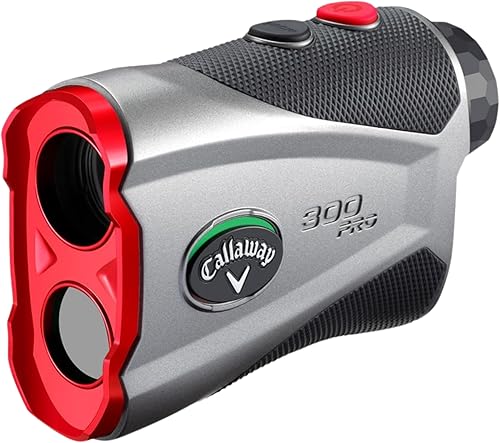
The Callaway 300 Pro measures 5 to 1000 yards with +/- 1 yard accuracy and 6x magnification. Its Pin Acquisition Technology locks onto the flag up to 300 yards away, and the pulse feature vibrates to confirm the target.
The Bushnell Phantom 3 Slope gives front, center and back distances for the green. It comes preloaded with 38,000+ worldwide courses and adjusts those numbers for slope with its patented technology.
On a long approach to a tucked pin, the laser tells you the exact number. On a blind tee shot over a hill, the GPS tells you how much green you have to work with.
Few devices do both well, so pick the number you reach for most often.
When the pin is the whole point
You want a rangefinder when your misses come from the wrong club, not the wrong line. The Callaway's pin lock removes the guesswork about which flag you hit on a green with several pins.
Its 6x magnification helps you pick the right target from distance, and the +/- 1 yard accuracy means the number is close enough for club selection. The pulse vibration tells you the reading landed on the flag, not the tree behind it.
The Callaway's range starts at 5 yards and runs to 1000, which covers everything from a short pitch to a target far down the range. It also reads in yards or meters, so the number matches whatever scorecard you carry.
The lens comes with a cleaning cloth in the box, and the whole unit weighs 8 ounces.
When the green is what matters
You want a GPS when you play unfamiliar courses, when you walk and want hands-free yardage, or when your eyesight makes aiming at a distant flag hard. The Bushnell's touchscreen shows front, center and back, so you can plan a shot to the safe part of the green.
Its large display and auto course and hole recognition mean you spend less time fiddling and more time choosing a club. That matters on a course you have never played.
The Phantom 3 Slope also includes GreenView with moveable pin placement. You can shift the pin on the display to match where the flag sits that day and read the yardage to that spot, which is as close to a pin number as a GPS gets without a laser.
The two approaches side by side
The table below lines up the Callaway 300 Pro and the Bushnell Phantom 3 Slope on the specs that matter most when you pick a type.
| Feature | Callaway 300 Pro (laser) | Bushnell Phantom 3 Slope (GPS) |
|---|---|---|
| What it measures | Distance to a target you aim at | Front, center and back of the green |
| Range | 5 to 1000 yards | Course library, 38,000+ courses |
| Accuracy | +/- 1 yard | Mapped course data |
| Magnification | 6x | Not applicable |
| Slope | Yes, with external on/off switch | Yes, Bushnell slope technology |
| Pin targeting | Pin Acquisition Technology, up to 300 yards | Moveable pin on screen |
| Display | None, reads through the viewfinder | Large touchscreen |
| Mounting | Magnahold magnet for the cart frame | BITE magnet for the cart bar |
| Battery | Lithium battery included | Rechargeable, up to 18 hours |
| Water resistance | IPX4 | Waterproof |
| Weight | 8 ounces | 78 grams |
| In the box | Case, lens cloth, quick start guide | GPS, charger, belt clip |
The table makes the split plain. The Callaway puts its effort into magnification, target lock and a slope switch.
The Bushnell puts its effort into a big screen, a course library and a battery that covers about four rounds.
How does each type handle slope?
Both approaches offer slope, but only the laser models here let you switch it off with an external control. Slope adds or subtracts yardage for elevation change, which helps on uphill and downhill shots.
The Callaway 300 Pro measures the angle of incline or decline and calculates the slope-adjusted distance. Its external Slope On/Off switch means you can turn the feature off for tournament play without digging through menus.
The Bushnell Phantom 3 Slope uses Bushnell's slope technology to adjust its GPS yardage. It is a GPS-first device, so slope works on the green distances it already shows.
The Acer Gadget also has slope with an on/off control and a shorter 800 yard range. If you want a second laser for practice rounds or a backup, our Acer Gadget Golf Rangefinder review covers how it handles the basics.
The GolfBuddy Voice 2S+ also has a slope mode you can switch on or off, so the voice read can be adjusted the same way. That keeps the talking device usable on courses where slope is banned, provided you set it before the round.
How easy is each to use on the course?
The GPS is the easier device to use because you never have to aim it. The laser takes a moment of steady hands but gives you a more specific number.
The Bushnell's BITE magnet holds it on the cart bar, and the touchscreen responds to a tap. Auto course and hole recognition mean it knows where you are without input.
The 18 hour battery covers about 4 rounds on one charge.
The Callaway's Magnahold magnet also clips to the cart frame. To get a number you lift it, sight the flag and press.
The pulse confirms the lock, then you set it back down.
The GolfBuddy Voice 2S+ takes hands-free further. It clips to your hat or belt and speaks the distance, and its 40,000 preloaded courses cover most of the world.
For a player who walks and dislikes stopping to check a screen, that voice read is the easiest of all.
What the extra features add on course
The GolfBuddy goes beyond plain yardage. It marks hazards and bunkers with left and right distances, so you know how much room you have to carry trouble.
Its screen shows the shape of the green and your angle of approach, plus the hole number and par.
Press a button and it tracks how far your last shot traveled, which helps you learn your real club distances over a round. The audio volume runs from 0 to 5, so you can mute it on a quiet course.
A reverse mode shows the read when the unit hangs on your belt rather than your hat.
Setup and maintenance
A GPS device needs its course library current. The Bushnell updates courses automatically, and the Phantom 3 Slope is rechargeable over its included charger.
A laser needs almost no setup beyond a battery. The Callaway ships with a battery and a hard carry case with a carabiner.
The Acer Gadget recharges over USB-C, which saves buying batteries but adds a charging routine.
Whichever you choose, our guide on whether you can take a golf rangefinder on a plane covers the carry-on rules before your next trip.
What about legal use in tournaments?
A laser with an external slope switch is the simplest legal option, because you can turn slope off in one move. GPS devices with slope raise the same question.
The Callaway 300 Pro's external switch is designed for exactly this. Turn slope off and the device gives a straight-line distance that is legal for tournament play under the usual local rules.
The Bushnell Phantom 3 Slope is built around slope-adjusted GPS numbers. If your competition bans slope, check whether the device has a slope-off mode before you rely on it.
The Acer Gadget also has a slope on/off control. A plain laser without slope sidesteps the issue entirely, though you give up the elevation help on practice rounds.
Always confirm the local rules for your event.
One practical habit helps either way. Switch slope off before the first tee, not when you reach for the device on the tenth.
That way you never have to remember mid-round whether the number in front of you is adjusted.
How much should you spend on each?
A laser usually costs more than a basic GPS, but both cover a wide range of budgets. The right spend depends on which number you value more.
A mid-range laser like the Callaway 300 Pro gives you pin lock, slope and a hard case. The Acer Gadget sits at a lower price point with a rechargeable battery and a shorter range.
A GPS device like the Bushnell bundles course maps and slope into one screen.
Budget matters less than fit. A cheap laser that shakes in your hands wastes money, and a GPS with a course library that misses your home track does the same.
Check the features you will actually use before you decide on price.
Look at what each box includes, too. The Callaway ships with a battery, a case and a lens cloth, so there is no extra spend on day one.
The Acer Gadget includes just the range finder and expects you to supply a USB-C cable. The Bushnell comes with its charger and a belt clip.
Those small extras add up over a season.
Our roundup of the best golf rangefinders with GPS covers devices that combine both approaches if you would rather not choose.
Who should buy which?
Laser buyers are players who want the pin number; GPS buyers are players who want the green. A few player types make the call easy.
Buy the Callaway 300 Pro if you play the same courses often and your club choice depends on the exact flag distance. Its pin lock and +/- 1 yard accuracy suit a player who aims at the flag on most approaches.
The hard case and cart magnet make it easy to carry and reach.
Buy the Bushnell Phantom 3 Slope if you travel to new courses, walk often, or want a big screen you can read at a glance. The touchscreen and 38,000+ course library mean you are set up on an unfamiliar hole without aiming at anything.
Quick picks by player type
- The tournament player who needs a legal device: the Callaway 300 Pro, because the slope switch comes off in one move.
- The walker who dislikes stopping to check a screen: the GolfBuddy Voice 2S+, because it speaks the yardage from a hat or belt clip.
- The budget-conscious first-timer: the Acer Gadget, because it is a rechargeable laser with flag-lock vibration.
- The traveler with a full schedule of new courses: the Bushnell Phantom 3 Slope, because the course library and touchscreen do the setup work.
Which should you buy?
Buy the Callaway 300 Pro if you want the exact pin distance and play the same courses often. Buy the Bushnell Phantom 3 Slope if you want course-wide yardage and maps without aiming.
That is the short answer to golf rangefinder vs GPS for most readers.
The Callaway 300 Pro edges it on score at 8.5. Its pin lock, +/- 1 yard accuracy and external slope switch make it the stronger all-round tool for a player who wants a precise number to the flag.
The 6x magnification and the pulse confirmation round out a device built for the shot at the pin.
The Bushnell Phantom 3 Slope at 8.4 is the better choice when your priority is knowing the green, not the pin. Its touchscreen, 38,000+ courses and slope-adjusted yardage suit the traveler and the player who walks.
The 18 hour battery means one charge covers most of a weekend of golf.
If budget is tight, the Acer Gadget at 7.9 gives you a rechargeable laser with flag-lock vibration for less. The GolfBuddy Voice 2S+ at 7.6 is the pick for hands-free voice yardage.
For a look at another laser in the same class, our Blue Tees Series 3 Max review shows what the mid-range offers.
The decision rule
Pick a laser if you regularly face shots where the pin number changes your club. Pick a GPS if you want a fast read on every hole and play many different courses.
If you can carry both, the GPS handles the planning and the laser handles the final number.
Whichever way you go, practice reading the device on the range before you trust it on the course. A few minutes with the manual and a known distance will tell you whether the number matches your eye.
Final word on golf rangefinder vs GPS
For most players, the Callaway 300 Pro is the device to buy first because the pin distance is the number that shapes the shot. Add a GPS later if you want course maps and hands-free yardage.
The choice is really about whether you aim at the flag or plan to the green.
Frequently asked questions
Is a golf rangefinder or a GPS better for most players?
A laser rangefinder suits most players who want the exact distance to the flag. A GPS device is the better pick when you want quick front, middle and back numbers without aiming, or when you play many unfamiliar courses and want course maps.
Can a golf GPS replace a rangefinder?
A golf GPS gives green yardage and course layout, but it does not measure the exact pin distance the way a laser does. Many players carry both, using the GPS for a quick read and the rangefinder for a precise shot at the flag.
Is a slope rangefinder legal in tournaments?
Only when the slope function is switched off. The Callaway 300 Pro and Acer Gadget both have an external slope on/off switch, so you can turn slope off for competition rounds.
Check the local rules before you play.
How accurate is a laser rangefinder compared with a GPS?
A laser rangefinder measures to a specific target within about a yard. GPS distances come from mapped course data and are typically given to the front, center and back of the green, so they are close but not a pin-specific measurement.
Do golf GPS devices need a subscription?
Not always. The Bushnell Phantom 3 Slope and GolfBuddy Voice 2S+ both come with large preloaded course libraries and free course updates, so you can use them without a monthly fee.


