Golf Rangefinder Slope vs No Slope: Which Is Better? (November 2026)
Buy a slope rangefinder with an on/off switch if you want both numbers. Leave slope off for competition rounds, where a straight-line yardage is the legal reading, and use the slope-adjusted figure in casual play to plan club choice on hilly holes.
On this page (7 sections)
- Golf rangefinder slope versus no slope: what's the real difference?
- How slope-adjusted and straight-line yardage work
- Do the rules allow slope during a round?
- Which model suits your game?
- Who should buy a slope rangefinder?
- How the slope switch changes your pre-round routine
- Which slope rangefinder should you buy?
Buy a slope rangefinder with an on/off switch if you want both numbers. Leave slope off for competition rounds, where a straight-line yardage is the legal reading, and use the slope-adjusted figure in casual play to plan club choice on hilly holes.
The golf rangefinder slope versus no slope question is really about two things: whether the rules allow the extra number, and whether your course rewards it. A switchable model gives you both modes without buying twice.
This comparison covers how each mode works, what the switch does for tournament play, and which of the two models below fits your game.
Golf rangefinder slope versus no slope: what's the real difference?
A slope model adds an adjusted yardage for the angle of the ground; a no-slope model gives the straight-line distance only. The raw laser reading is the same in both cases.
The difference is the extra math on top.
A rangefinder fires a laser at the flag and times the reflection to get the distance. That figure measures a straight line from your eyepiece to the pin.
It doesn't know whether the ground between you rises or falls.
A slope model measures the incline or decline as well. It takes that angle and works out how far the shot plays when you factor in the elevation change.
That adjusted figure is the one that matches the club you'd actually hit.
The Callaway 300 Pro does this by measuring the angle of incline or decline and then calculating the slope-adjusted distance. The Acer Gadget lists slope compensation among its six modes.
Neither approach is more accurate. They answer slightly different questions, and the rules decide which one you're allowed to use.
How slope-adjusted and straight-line yardage work
The straight-line figure is the measured distance; the slope figure is that distance corrected for the angle of the shot. On flat ground the two land close together, and on steep holes they can differ by a club or more.
Think of a hole that climbs 30 feet from your ball to the flag. The laser measures the line to the pin, but the ball has to travel up that rise to get there.
The slope mode folds the climb into the number it shows you.
Downhill works the same way in reverse. A shot dropping to a lower green plays shorter than the straight-line figure suggests, and the adjusted number reflects that.
The size of the gap depends on the angle. A gentle rise changes little, while a steep approach can move the figure by a meaningful margin.
That's why the mode matters most on courses with real elevation change.
The slope calculation never replaces the raw measurement. You still see the distance; the device adds a second, adjusted figure beside it.
The shot that shows the gap best
The clearest case for slope is an approach to a green that sits well above or below the fairway. Say the flag is 150 yards away on the laser but the green is cut into a hillside.
The straight-line number tells you where the pin is; the slope number tells you how far the ball has to fly to get there.
That second figure is what you want in your hand when you pick a club. On a steep uphill approach, the ball needs more club than the straight-line number suggests.
On a downhill approach, it needs less.
On level fairways the two readings sit almost on top of each other. The gap opens as the angle steepens, which is why players on flat courses rarely notice the difference.
What each reading is best for
Use the straight-line number when you want the raw distance to the pin. It is the figure the rules allow, and it is the one to trust in a round that counts.
Use the slope number when you are planning the shot in practice or casual play. It folds the ground into the figure, so you spend less time guessing how much the hill takes off or adds.
Keeping both in view is the argument for a switchable unit. You see the legal number and the adjusted number without carrying two devices.
Do the rules allow slope during a round?
Slope is not allowed in rounds played under the equipment rules, so the straight-line mode is the one for competition. This is the point that decides the choice for most golfers who play medals or matches.
The rules restrict distance-measuring devices to those that give distance only. A device that measures elevation change and adjusts the yardage falls outside that limit, even if you never read the adjusted figure.
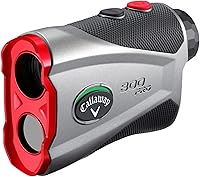
The fix on the Callaway 300 Pro is a physical switch. The Callaway 300 Pro has an external Slope On/Off Switch, and the maker states it is legal for tournament play when set to off.
The Acer Gadget uses the same on/off approach.
An external switch beats a menu setting for one simple reason: it's easy to see and confirm. You can check it at the first tee without scrolling through screens.
Leave the switch off for any round that counts, and turn it back on for practice or casual play. If you only ever play social rounds, the rules point matters less, but the switch still gives you the choice.
Which model suits your game?
The Callaway 300 Pro is the stronger all-round pick; the Acer Gadget is the better value if you want a rechargeable slope unit. Pick by budget and how much range you need, not by the slope feature alone.


| Product | Best for | Range | Magnification | Slope control | Our score |
|---|---|---|---|---|---|
| Acer Gadget Golf Rangefinder | switchable slope | 800 yards | 6x | On/off switch | 7.9 |
| Callaway 300 Pro | slope with pin lock | 5-1000 yards | 6x | External on/off switch | 8.5 |
Callaway 300 Pro: the all-round slope pick
The 300 Pro pairs a slope-adjusted reading with a strong set of distance tools. It has 6x magnification and a 5 to 1000 yard range with plus or minus 1 yard accuracy.
That range covers long approaches and the practice ground.
Pin Acquisition Technology locks onto the flag up to 300 yards out. A pulse feature emits a short vibration to confirm the lock, which helps when the pin sits against a busy background.
The external slope switch is the piece that makes it tournament-ready.
A strong magnet lets you stick the unit to a cart frame, so it stays within reach between shots. The package includes a molded hard carry case and a battery.
If you want the full picture, our Callaway 300 Pro review compares it with a rival in the same class.
Acer Gadget: the rechargeable slope option
The Acer Gadget is the model to consider if you'd rather not manage batteries. It runs on a USB-C rechargeable lithium-ion battery, and the maker says that's enough for a full round.
It measures to 800 yards with 6x magnification and plus or minus 0.5 yard accuracy. The slope switch works the same way as the Callaway's: on for adjusted yardage, off for the legal straight-line number.
The flag lock adds a vibration alert when it finds the pin.
The 800-yard range is shorter than the Callaway's 1000 yards. That matters little for most approach shots but may matter on long par fives or when ranging distant objects.
Our Acer Gadget review covers the modes in more detail.
The numbers that separate them
The Callaway 300 Pro gives you plus or minus 1 yard accuracy, and the Acer Gadget gives you plus or minus 0.5 yard. On the course that gap is smaller than the spread in your own swing, so it is not the reason to pick one.
The bigger split is range. The Callaway measures 5 to 1000 yards and the Acer Gadget measures to 800 yards.
Both cover the flag on a normal approach, but the extra reach helps on long holes and when you range something other than the pin.
Pin lock also differs in reach. The Callaway locks onto the flag up to 300 yards out.
The Acer Gadget's flag lock is rated to its full 800 yards. Both confirm the lock with a vibration.
Magnification is a tie at 6x on each. The bodies differ too: the Callaway weighs 8 ounces and the Acer Gadget weighs 11.2 ounces.
The Callaway's lighter body suits a pocket or a cart magnet, while the Acer Gadget's weight sits in the hand as steady mass.
Who should buy a slope rangefinder?
Buy slope if you play hilly courses and want help with club choice, and buy no-slope if your rounds are flat or you want the simplest legal unit. The right answer depends on your course, not on the feature list.
A slope model earns its place when several holes climb or drop. You get a number that already accounts for the rise to the green, which takes one calculation off your plate.
That's useful on long approaches where a club short or long costs you a shot.
The switch means you don't give up legal play. You set slope off for competition and on for practice, so one device covers both.
A no-slope model suits the golfer whose home course is mostly flat. On level ground the adjusted figure barely differs from the straight-line number, so the extra mode adds little.
A simple no-slope unit also removes any risk of leaving slope on by mistake.
If you're weighing a dedicated slope model against a full lineup, our guide to the best golf rangefinders with slope sorts the options by use case.
When slope is the better buy
Slope suits you if your course has genuine elevation change and you want a faster club decision. It also helps if you play a mix of casual and competition rounds, because the switch covers both.
A slope unit is less useful if you never play a hilly course. In that case you're paying for a mode you'll keep switched off.
When no-slope is the better buy
No-slope suits flat courses and golfers who want one simple legal reading every round. It's also the simpler unit to hand to a beginner who is still learning to trust the laser number.
Skip slope if you worry about forgetting the switch. A no-slope model can't be set wrong.
How the slope switch changes your pre-round routine
Check the switch before the first tee, then leave it set for the type of round you're playing. A 10-second habit keeps you on the right side of the rules.
For a competition round, set slope off and confirm the reading is the straight-line distance. Do this before you leave the car park rather than at the first tee.
For practice or a casual round, turn slope on. You can then compare the adjusted figure with the straight-line number on the same shot, which is a useful way to learn how elevation affects your club choice.
Both models have a slope on/off switch, so the check is quick before you tee off. The Callaway 300 Pro's external switch makes the legal setting obvious at a glance.
Keep the same order every round: switch first, then range the flag. That way the mode is settled before you start thinking about the shot.
Practice drills that use the adjusted figure
The slope number earns its keep fastest when you test it against your own eyes. Range a flag on a sloped hole with slope on, note the adjusted figure, then hit a club to that number.
Compare the result with what the straight-line figure would have suggested.
Repeat it a few times on the same hole and you start to see how much the hill takes off or adds. That is the feel a slope reading is meant to give you, and it carries over to holes you have never played.
Which slope rangefinder should you buy?
The Callaway 300 Pro wins overall for most golfers, and the Acer Gadget is the pick if a rechargeable battery matters more to you. The golf rangefinder slope versus no slope call comes down to your course and your rules.
The 300 Pro's edge is its combination of range, pin lock and an external slope switch. The 5 to 1000 yard range and Pin Acquisition Technology make it a capable distance tool on long holes, and the slope mode is there when you want it.
The cart magnet is a practical touch for players who walk or ride.
The Acer Gadget is the better fit if you want to skip disposable batteries. Its USB-C battery and 0.5-yard accuracy suit the golfer who plays often and would rather charge than swap cells.
The 800-yard range covers most course needs.
Either way, buy a switchable model rather than a fixed one. The switch gives you the adjusted yardage for practice and the legal straight-line reading for competition, so one device handles both.
Our Blue Tees Series 3 Max+ review is worth a read if you want another switchable option in the mix.
Frequently asked questions
Is a slope rangefinder legal in tournaments?
A slope rangefinder is legal only when its slope feature is switched off. The Callaway 300 Pro and the Acer Gadget both offer a slope on/off switch, which makes the legal setting easy to confirm before a round starts.
Does slope mode really change club choice?
It can. On an uphill or downhill shot the slope-adjusted figure accounts for the angle of the ground, so the number you play to differs from the straight-line yardage.
The flatter the hole, the smaller the gap between the two.
Do I need slope if my course is flat?
No. On mostly flat courses the slope-adjusted and straight-line figures land close together, so a no-slope model covers almost every shot.
Slope earns its keep on courses with real elevation change, where you play several uphill and downhill holes.
What happens if I leave slope mode on during a round?
Leaving slope on in a competition round breaks the equipment rules, even if you never look at the adjusted figure. Check the switch before you tee off and keep the straight-line mode set for any round that counts.
Can a no-slope rangefinder be upgraded later?
No. Slope is built into the device, so a no-slope model stays that way.
If you think you'll want the adjusted figure later, buy a switchable model now rather than replacing the unit.