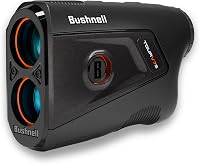
Bushnell Tour V6 Shift vs V7 Shift: Which Is Better? (November 2026)
The Bushnell Tour V7 Shift wins for most golfers because its dual-color OLED puts slope yardage in green and raw distance in red, plus it adds Yardage Range Recall and LINK pairing. The Tour V6 Shift is the better buy for anyone who wants the same 1300-yard range, 6X magnification and slope switch without the extra display features.
On this page (8 sections)
- Bushnell Tour V6 Shift vs V7 Shift: what actually changed?
- The dual-color OLED is the headline change
- Yardage Range Recall and LINK pairing add real utility
- Slope switching and tournament play
- Which model suits your game?
- How the price gap changes the decision
- Protection and carry for either model
- The verdict: which Bushnell wins?
The Bushnell Tour V7 Shift is the better rangefinder for most golfers because the dual-color OLED separates slope yardage from raw distance and it adds Yardage Range Recall and LINK pairing. The Bushnell Tour V6 Shift is still the smarter buy if you want a clean slope switch and the same 1300-yard range without paying for display extras.
That is the short version of the Bushnell Tour V6 Shift vs V7 Shift question, and the rest of this comparison shows where the differences actually land on the course.
Both units carry the same core numbers. Each lists a 1300-yard measuring range and 6X magnification, and both use slope-adjusted readings for uphill and downhill shots.
What separates them is how that slope data reaches your eye and what else the unit can do with it.


Bushnell Tour V6 Shift vs V7 Shift: what actually changed?
The V7 Shift changes how the yardage is shown and what the rangefinder can remember and share. The V6 Shift stays the simpler slope device.
Everything else in the comparison follows from those two shifts.
Bushnell kept the distance engine steady across the pair. You still get 6X magnification, a 1300-yard range and slope compensation on both.
The newer model spends its upgrades on the display, on recall and on pairing with launch monitors.
That split matters because rangefinder buyers fall into two groups. Some want the cleanest possible distance read and nothing else.
Others want the device to feed their club selection. The V6 Shift serves the first group, the V7 Shift the second.
Where the two models line up
Start with what didn't change. Both carry 1300-yard range and 6X magnification, both measure slope and adjust the yardage, and both use PinSeeker with Visual JOLT for flag acquisition.
The JOLT confirmation matters more than the spec sheet suggests, because a steady flag lock is what makes a distance trustworthy.
Both also ship as Bushnell Patriot Packs. The V6 Shift includes a premium case, veteran coin, microfiber cloth, quick-start guide and CR2 battery.
The V7 Shift includes the rangefinder, divot tool, premium carry case, microfiber cloth, CR2 battery and quick start guide. Either way, you can use the unit the day it arrives.
The bodies differ more than the numbers suggest. The V6 Shift is a plastic-bodied unit rated IPX6 and marked waterproof, and it carries the BITE magnetic mount on its shell.
The V7 Shift is also plastic, measures 1.6 by 4.5 by 3.1 inches and weighs 1.2 pounds. Its bullet set leads with the display and the software, not with a magnet.
So the cart-sticking trick you get out of the box on the V6 Shift is something you plan around on the V7 Shift.
The dual-color OLED is the headline change
The V7 Shift shows slope-adjusted "plays-like" yardage in green and actual distance in red. That color split is the single biggest practical difference in the Bushnell Tour V6 Shift vs V7 Shift matchup.
Slope First Technology puts the compensated number front and center, and the color coding tells you which number you are looking at without a second glance.
On a course with real elevation change, those two figures can differ by several clubs. Reading the wrong one is a common and expensive mistake.
A green slope number and a red raw number turn that from a mental check into a visual one.
The V6 Shift still delivers slope-adjusted distances, just without the split color treatment. If you play mostly flat courses, the slope readout matters less and the color display earns less of its premium.
Bushnell says its slope technology is trusted by 99% of PGA Tour players, which speaks to the math behind the reading rather than the display that presents it.
Who notices the display upgrade most?
Golfers who play hilly layouts will feel the difference on nearly every approach. So will anyone who switches between slope and non-slope rounds, because the color cue reduces the chance of playing the wrong number.
Players on flat parkland courses can save the money. The V6 Shift gives them the same slope math in a single readout, and the external switch keeps tournament play simple.
Does the color split replace a slope switch?
No. The OLED changes how you read the numbers, not whether the unit applies slope.
The V7 Shift's bullet set centers on Tour-Trusted Slope Technology and presents the compensated distance first. The V6 Shift pairs its slope compensation with a physical external switch so the mode is visible before you raise the unit.
If a committee asks whether slope is on, a switch you can see and flip answers faster than a menu state buried in the display. The color screen is a reading aid, not a legality control, so decide which of those two jobs you actually need.
Yardage Range Recall and LINK pairing add real utility
The V7 Shift remembers your last measured distance and pairs with Bushnell and Foresight launch monitors. Neither feature exists on the V6 Shift.
Yardage Range Recall revisits the previous target with a single press, which helps on the practice range or when you want to double-check a flag you already shot.
LINK-enabled technology is the bigger idea. The rangefinder pairs with Bushnell and Foresight launch monitors to display personalized club suggestions based on your own yardage data.
Instead of reading a number and translating it into a club in your head, the system does some of that translation for you.
The V6 Shift asks you to do that work yourself. For an experienced player with a settled club chart, that is no burden.
For someone building a bag and learning carry distances, the LINK suggestions are a genuine shortcut.
Slope switching and tournament play
The V6 Shift's external slope switch is the friendlier design for tournament golfers. Flip it off and the unit gives raw distance only, which is what most competition rules require.
The switch is physical, so you can confirm the mode without turning the device toward you.
The V7 Shift relies on Tour-Trusted Slope Technology rather than a visible external switch in its feature set. The compensated distance sits front and center by design.
If your regular game includes sanctioned events, check the local rule on slope devices before you buy either model.
Both units confirm flag locks with PinSeeker and Visual JOLT. The V6 Shift uses a red visual ring that flashes along with a vibration.
The V7 Shift lists PinSeeker with Visual JOLT and is described as fast and steady on target acquisition. A confident lock is worth more than a colorful screen when the pin is tucked behind a ridge.
Which model suits your game?
Pick the V7 Shift for slope-heavy courses and club-selection help. Pick the V6 Shift for tournament play and a lower-cost slope device.
The right answer depends on how often you actually use the extras.
The V7 Shift is the choice for the golfer who plays rolling terrain, wants the slope number called out in color and likes the idea of launch-monitor pairing to sharpen club choices. It also suits the player who practices with a launch monitor and wants the rangefinder to speak the same language.
The V6 Shift is the choice for the competitor who needs a clean on/off slope switch, the player on flatter courses, and anyone who would rather spend the difference on greens fees. Its BITE magnetic mount is a practical bonus for cart golfers, since the unit sticks to the cart frame for one-handed grabs.
Golfers who should pick the Tour V7 Shift
Choose the V7 Shift if elevation changes shape most of your approach shots. The green slope readout saves a mental step on every one of them, and Yardage Range Recall helps when you want to confirm a number you already shot.
It also fits the data-minded player. LINK pairing turns your rangefinder into part of a larger distance system rather than a standalone device.
Our full Bushnell Tour V7 Shift review digs into how that system works in practice.
Golfers who should pick the Tour V6 Shift
Choose the V6 Shift if you play in competitions where slope must be switched off. The external switch makes that a one-second job, and the unit still delivers 1300-yard range and 6X magnification when slope is off.
It also makes sense for the budget-conscious buyer who wants Bushnell's slope math without the display premium. The Bushnell Tour V5 rangefinder review is worth a read if you are weighing an older generation against this one.
How the price gap changes the decision
The V7 Shift costs more, and the extra money buys display, recall and pairing rather than more range. That framing is the honest way to judge the upgrade.
You are not getting a longer-reaching or sharper rangefinder.
You are getting a different way to read and use the same distances.
This is also where the why Bushnell rangefinders cost so much question comes in. Bushnell prices its Tour line as premium equipment, and the V7 Shift sits at the top of that ladder.
The premium buys the OLED display and the LINK ecosystem more than raw optical performance.
If you rarely use slope, the gap is hard to justify. If you play hilly courses every week and want club help, the V7 Shift's extras show up on nearly every approach.
Our Blue Tees Captain Pro vs Bushnell Tour V7 Shift comparison covers how the V7 Shift stacks up against a rival at a similar price.
Is the V7 Shift worth the upgrade from a V6 Shift?
Only if you will use the display and the pairing. A golfer who already owns a V6 Shift gets the same range and magnification from the newer model, so the upgrade is really about the readout and LINK.
If those features would sit unused, keep the V6 Shift and spend the money elsewhere.
Protection and carry for either model
Both rangefinders are precision optical tools, and a silicone case is cheap insurance. The Tour V6 Shift ships with a premium case in its Patriot Pack.
The V7 Shift includes a premium carry case and a divot tool as well.
Those included cases handle storage, but a fitted silicone sleeve adds grip and drop protection during a round.
Two TUSITA silicone cases are cut for the Bushnell Tour V6 and Tour V6 Shift. The black version lists silicone construction, precise cutouts for buttons and ports, and an 18-month warranty.
The red version carries the same fit and materials. Either one keeps the unit usable without removing the cover, which matters when you are shooting a flag mid-round.
Both list a soft shell, a solid pattern and a dust-resistant finish, and each weighs 0.08 kg. Note that the red version is also listed as not water resistant, so neither sleeve should be treated as a rain cover.
Neither case fits the V7 Shift. Its Patriot Pack case is the cover Bushnell supplies for that model.
Treat the included case as your first line of defense and keep the lens clean with the microfiber cloth in the box.
The verdict: which Bushnell wins?
The Bushnell Tour V7 Shift wins this matchup for most golfers. The dual-color OLED makes slope and raw distance instantly separable, Yardage Range Recall saves a press when you want to recheck a target, and LINK pairing turns the rangefinder into part of a club-selection system.
Those are the changes that define the Bushnell Tour V6 Shift vs V7 Shift gap, and they justify the higher price for anyone who plays elevation and wants help picking a club.
Buy the V6 Shift instead if you need an external slope switch for competition, play mostly flat courses, or would rather put the price difference toward something else in the bag. It keeps the same 1300-yard range, 6X magnification, slope compensation, Visual JOLT and magnetic cart mount.
The decision rule is simple. Pick the V7 Shift when slope-heavy courses and launch-monitor data drive your club choices.
Pick the V6 Shift when tournament legality and value matter more than the color display. Either way, you are getting Bushnell's slope math and a fast, steady flag lock.
Frequently asked questions
What is the main difference between the Bushnell Tour V6 Shift and V7 Shift?
The V7 Shift adds a dual-color OLED display, Yardage Range Recall and LINK-enabled technology. The V6 Shift keeps the 1300-yard range, 6X magnification, slope compensation, Visual Jolt and a magnetic cart mount without those extras.
Is the Bushnell Tour V7 Shift tournament legal?
The V7 Shift uses Tour-Trusted Slope Technology, which puts the compensated distance front and center. The V6 Shift uses an external slope switch so you can turn slope mode off for tournament-legal play.
If your competition bans slope devices outright, confirm the rules with your committee before either model goes in the bag.
Do both rangefinders reach 1300 yards?
Yes. Both the Tour V6 Shift and Tour V7 Shift list a 1300-yard measuring range and 6X magnification.
Flag acquisition at normal golf distances sits well inside that limit on both units.
What does LINK-enabled technology do on the Tour V7 Shift?
The V7 Shift pairs with Bushnell and Foresight launch monitors to display personalized club suggestions built from your own yardage data. The V6 Shift has no LINK pairing, so it simply gives you the distance and you choose the club.
Which one is easier to read in bright sun?
The V7 Shift's dual-color OLED shows slope-adjusted yardage in green and actual distance in red. The V6 Shift doesn't have that split color readout.
On glare-heavy days the color difference should make the two numbers easier to tell apart, which matters when slope and raw distance disagree.