Callaway 300 Pro vs Bushnell Tour V5: Which Is Better? (November 2026)
The Callaway 300 Pro wins for most daily players because its slope-adjusted distance and legal slope switch cover casual rounds and tournaments. Pick the Bushnell Tour V5 only if you specifically want Bushnell's range and magnification.
On this page (8 sections)
- Quick verdict: which rangefinder should you buy?
- Callaway 300 Pro vs Bushnell Tour V5 side by side
- Slope handling decides tournament golfers
- Magnification and range in the viewfinder
- Pin lock and vibration feedback
- Cart mounting and carrying the unit
- Battery, size and everyday handling
- Which one should you buy?
The Callaway 300 Pro wins for most daily players because its slope-adjusted distance and legal slope switch cover casual rounds and tournaments. Pick the Bushnell Tour V5 only if Bushnell's magnification and brand are what you want in the viewfinder.
This callaway 300 pro vs bushnell v5 comparison weighs the features that actually change how you play. Slope handling, magnification, pin lock and how the unit rides on the cart matter more than the badge on the shell.
Both are laser rangefinders aimed at the same buyer: the golfer who wants a fast, accurate number to the flag without paying tour-level money. The differences show up in how each one handles slope, how large the target looks and how you carry it around the course.
Quick verdict: which rangefinder should you buy?
Buy the Callaway 300 Pro for most rounds, because its slope measurement and external switch handle both casual and tournament play. The Bushnell Tour V5 makes sense only if you've decided Bushnell's viewfinder is what you want.
The Callaway 300 Pro gives you slope-adjusted distance, a switch that turns that reading off for legal play and a magnet that sticks the unit to the cart frame. That mix covers the two situations most golfers face: practice and casual rounds where slope helps, and competition where it must be disabled.
The Bushnell Tour V5 enters the conversation on magnification. Its 7x viewfinder shows the flag larger than the Callaway's 6x, which some players prefer for picking out a distant pin.
If that larger image is your priority, the Bushnell is the one to look at.
For everyone else, the Callaway's feature set is the more complete package for daily play. It answers the question the rangefinder exists to answer, and it does so in a way you can use in any round.
Callaway 300 Pro vs Bushnell Tour V5 side by side
The Callaway 300 Pro brings slope, pin lock and a cart magnet; the Bushnell Tour V5 counters with 7x magnification. The table lines up what each unit offers so you can see where the two diverge.

| Product | Best for | Magnification | Range | Accuracy | Our score |
|---|---|---|---|---|---|
| Callaway 300 Pro | tournament play | 6x | 5-1000 yd | +/- 1 yd | 8.5 |
| Callaway Golf Warbird Golf Balls | backup balls | 9.2 | |||
| JAWEGOLF Golf Rangefinder Hard Shell Carry Case | protecting the unit | 9.5 |
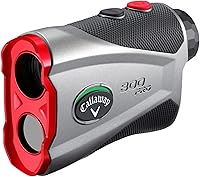
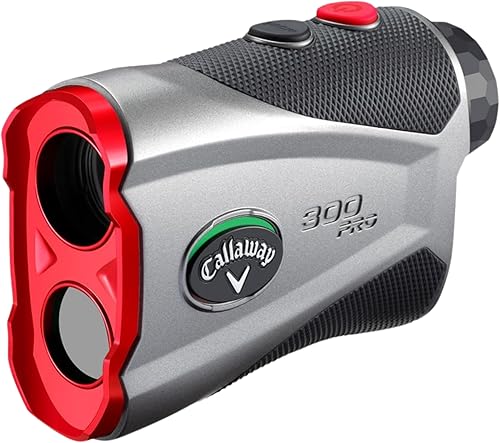
The Callaway 300 Pro lists 6x magnification, a 5 to 1000 yard range and +/- 1 yard accuracy. It measures in yards or meters, and the external slope switch is legal for tournament play.
Pin Acquisition Technology locks onto the flag up to 300 yards, and a pulse vibration confirms the distance. Callaway builds in a strong magnet, which it calls Magnahold, so the unit affixes to the cart frame.
It ships with a molded hard carry case, a carabiner and an elastic quick-close band, and units sold in the US include a battery.
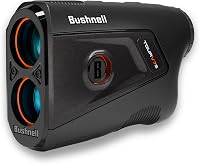
The Bushnell Tour V5 is a 7x laser rangefinder from a brand long associated with distance measuring. The magnification is the clearest spec difference between the two, and it's the main reason a shopper would pick the Bushnell over the Callaway.
Neither unit is complicated to run. Both give you a distance to the pin in a second or two, and both are built for the golfer who plays regularly and wants a reliable number rather than a full GPS display.
Slope handling decides tournament golfers
The Callaway 300 Pro's external slope switch makes it the rangefinder for players who enter competitions. It measures incline and decline, then calculates a slope-adjusted distance, and the switch turns that reading off for legal play.
This matters because slope-assisted distance isn't allowed in sanctioned rounds. A rangefinder with slope built in and no way to disable it is a practice-only tool.
The Callaway's external switch solves that in one movement: flip it off and the unit shows line-of-sight distance only.
The Bushnell Tour V5's slope story depends on the exact model you buy. Bushnell sells the Tour V5 in a slope version and a non-slope version, so check which one you're ordering before you compare.
If you buy the non-slope model, you get a straight-line distance and nothing more.
For a golfer who plays club events or qualifiers alongside weekend rounds, the Callaway's switch is the deciding feature. You don't need two rangefinders or a second device.
One unit covers the range session and the medal round.
What slope-adjusted distance actually gives you
Slope compensation adjusts the raw distance for elevation change. On an uphill shot, the ball plays longer than the laser reads; on a downhill shot, it plays shorter.
The Callaway 300 Pro measures the angle and returns a distance you can club to.
That's useful on hilly courses where the flag sits above or below you. On flat layouts the difference is small, but it still removes a mental calculation from your pre-shot routine.
The Bushnell slope model offers the same idea, so this isn't a Callaway-only advantage.
The point in Callaway's favor is the external switch, not the slope math itself. A slope rangefinder you can legally switch off is more useful than one you can't.
Magnification and range in the viewfinder
The Bushnell Tour V5 shows the target larger at 7x, while the Callaway 300 Pro offers 6x magnification and a 5 to 1000 yard range. Both magnifications are workable for flag hunting; the Bushnell's edge is a slightly bigger image.
Magnification is a simple spec with a real effect. At 7x, the flag appears larger than at 6x, which can help you settle the crosshair on a distant pin.
At normal course distances the gap is modest, and either unit gets you a reading.
The Callaway 300 Pro pairs its 6x view with a stated range of 5 to 1000 yards and +/- 1 yard accuracy. It measures in yards or meters, so you can set it to whichever unit your course uses.
That range covers the longest par 5s most golfers will face.
Range claims are best read against your own course. A 1000-yard maximum doesn't mean you'll lock onto a flag at that distance, since pin lock is a separate spec.
The Callaway's Pin Acquisition Technology locks onto the pin up to 300 yards, which is the number that matters when you're aiming at a flag.
If you play long courses and want the largest possible view of the pin, the Bushnell's 7x is the reason to choose it. If 6x is enough, the Callaway's magnification won't hold you back.
Pin lock and vibration feedback
The Callaway 300 Pro locks onto the pin up to 300 yards and vibrates to confirm the distance. That pulse is a small feature with a big effect on pace of play.
Pin Acquisition Technology does the work of finding the flag, and the pulse feature emits short vibrating bursts when the unit has locked on. You feel the confirmation rather than having to squint at the display to check whether the number is the flag or a tree behind it.
The vibration also helps when the pin is partly hidden or when you're shooting into a busy background. You know the unit has the right target without a second look.
The Bushnell Tour V5 also uses pin-seeking technology. Bushnell's approach centers on locking the flag and confirming the read, and the exact feedback depends on the model.
The Callaway's pulse is spelled out in its feature set, which makes it easy to know what you're getting.
For a golfer who plays quickly, a clear lock confirmation saves time on every approach shot. That's the practical value of the feature, and it's one reason the Callaway suits daily play.
Cart mounting and carrying the unit
The Callaway 300 Pro's built-in magnet clips it to the cart frame; the Bushnell Tour V5 relies on a carry case. How you hold and stow the rangefinder changes how often you actually use it.
The Callaway's Magnahold magnet is integrated into the body. You stick the unit to the cart frame and it stays within reach, so you don't unzip a bag or pat a pocket before every shot.
That's a real convenience over 18 holes.
The unit also ships with a molded hard carry case, a carabiner and an elastic quick-close band. The case protects the optics between rounds, and the carabiner clips it to a bag or cart.
If you want extra protection or a case you can wear on your belt, a separate hard shell case is worth adding. The JAWEGOLF Golf Rangefinder Hard Shell Carry Case fits the Callaway 300 Pro and the Bushnell V5, with an internal size of 4.7 x 3.3 x 1.9 inches.
Its elastic band lets you keep the case open on the cart, and the carabiner and belt loop keep it secure.
Bushnell's case design is part of the package, and it does the same basic job: protect the unit and keep it with your gear.
The Callaway's edge here is the magnet, which removes the case from the equation during play.
Battery, size and everyday handling
The Callaway 300 Pro runs on a lithium battery included with US units and measures 4 x 2.7 x 1.4 inches at 8 ounces. The Bushnell Tour V5 is a comparable handheld size; check its battery type before you order.
Size and weight affect how the unit feels in your hand and how it rides on the cart. The Callaway 300 Pro is a compact 4 x 2.7 x 1.4 inches and weighs 8 ounces.
It's small enough to cup in one hand and light enough to hold steady against the flag.
The Callaway has an IPX4 water resistance rating, so it handles light rain and damp mornings. It's listed as waterproof, but IPX4 is splash resistance rather than a rating for submersion.
Keep it out of puddles and heavy downpours.
Battery type matters for planning. The Callaway uses a lithium battery, and units sold in the US include one.
That means you can use it out of the box. The Bushnell Tour V5's battery setup depends on the model, so confirm what's included when you buy.
Neither unit needs much care. Wipe the lenses with a soft cloth, keep the unit in its case between rounds and avoid leaving it in a hot car.
A rangefinder that lives in the bag and stays clean will keep giving reliable readings.
Which one should you buy?
Buy the Callaway 300 Pro if you want one rangefinder for casual and tournament rounds; buy the Bushnell Tour V5 if its 7x viewfinder is the feature you want most. The callaway 300 pro vs bushnell v5 decision comes down to slope flexibility against magnification.
Pick the Callaway 300 Pro if you play a mix of casual and competitive golf. The external slope switch covers both, and the pin lock and cart magnet make it quick to use.
It's the more complete tool for daily play.
Pick the Bushnell Tour V5 if you've decided the larger 7x image matters more than a built-in slope switch. That's a real preference, and the Bushnell's viewfinder is its strongest argument.
Just confirm whether you're buying the slope or non-slope version.
If you're still learning the unit, our guide on how to use the Callaway 300 Pro walks through the modes and the slope switch. For a wider look at how these matchups play out, the Bushnell Tour V7 Shift review covers the next model up, and the Blue Tees Captain Pro vs Bushnell Tour V7 comparison shows how the newer Bushnell stacks up against a rival.
If you need balls to go with the rangefinder, the Callaway Golf Warbird Golf Balls come in a 24-ball pack. The two-piece design and high launch suit everyday rounds and practice.
For most golfers, the Callaway 300 Pro is the rangefinder to buy. It answers the distance question on any course and in any format, and its slope switch keeps it legal when the round counts.
The Bushnell Tour V5 is the pick only when its magnification is what you're after.
Frequently asked questions
Is the Callaway 300 Pro legal in tournaments?
Yes. The external slope switch turns slope compensation off, and the Callaway 300 Pro is legal for tournament play in that mode.
Leave the switch in the off position during sanctioned rounds.
What is the difference between 6x and 7x magnification?
Magnification sets how large the target appears in the viewfinder. The Callaway 300 Pro has 6x and the Bushnell Tour V5 offers 7x, so the Bushnell shows the flag slightly larger.
Both are enough to lock onto a pin at normal course distances.
Does the Callaway 300 Pro measure slope?
Yes. It measures the angle of incline or decline and calculates a slope-adjusted distance.
The external switch lets you turn that reading off when a round requires a legal, line-of-sight-only mode.
Can the Callaway 300 Pro attach to a golf cart?
Yes. It has a built-in magnet, which Callaway calls Magnahold, so you can stick the unit to the cart frame.
That keeps the rangefinder within reach between shots without digging through your bag.
Which rangefinder has the longer range?
The Callaway 300 Pro lists a range of 5 to 1000 yards. Check the Bushnell Tour V5's stated range against your home course, since the model you buy should cover the longest shot you'll need to measure.